Most people assume a newly constructed commercial building will have great lighting.
After all, everything else is brand new.
The paint is fresh. The flooring is spotless. The finishes are modern. The space feels professional.
Then someone flips on the lights.
One area feels bright while another feels dim. The reception area feels warm and inviting, while the office down the hall feels cold and blue. The warehouse has dark corners. The retail space has uneven lighting that makes displays look inconsistent.
The building may be new, but the lighting experience feels unfinished.
It happens more often than many property owners realize.
The lowest bid does not always deliver the best results
Lighting is often treated as a commodity during construction.
When budgets become tight, fixtures can quickly become one of the first places where costs are reduced.
The problem is that cheaper fixtures frequently create more expensive problems later.
Lower-quality products often have shorter lifespans, inconsistent performance, reduced efficiency, and limited warranty support. What appears to be a savings during construction can easily become years of maintenance headaches and unnecessary operating expenses.
"The cheapest fixture on bid day is not always the least expensive fixture over the life of the building."
Good lighting starts with good planning
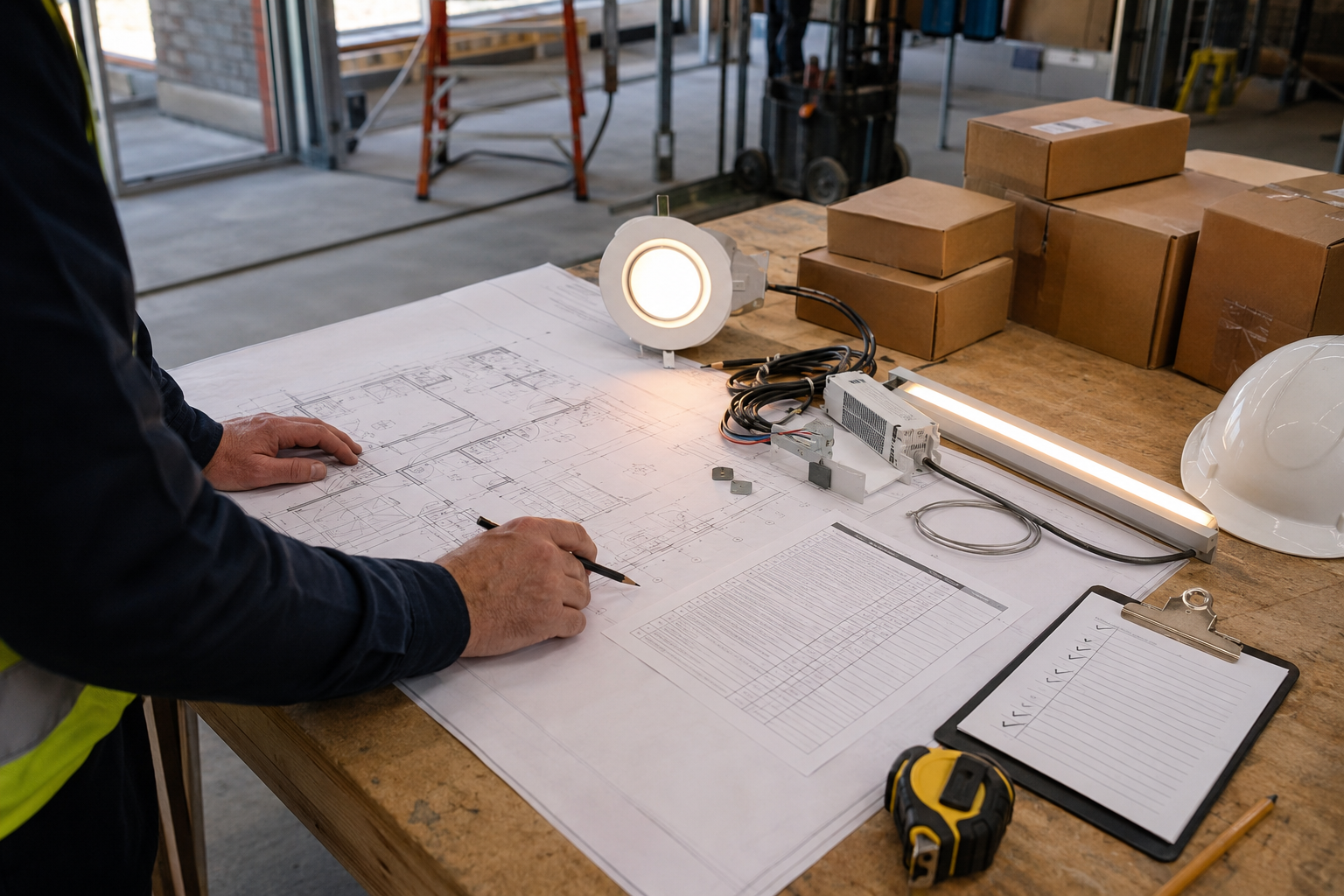
One of the most common mistakes in commercial construction is treating lighting as an afterthought.
Many projects focus heavily on layout, finishes, furniture, and aesthetics while lighting decisions are pushed toward the end of the process.
Thoughtful lighting design considers how people actually use the space.
Questions that should be asked include:
- Where do employees spend the majority of their day?
- Which areas require the highest visibility?
- How will customers experience the space?
- What safety concerns exist after dark?
- What maintenance challenges could arise in the future?
The best lighting plans support the purpose of the building rather than simply filling the ceiling with fixtures.
Poor fixture placement creates uneven lighting
Even high-quality fixtures can perform poorly when they are installed in the wrong locations.
A common mistake is designing lighting layouts based on fixture counts instead of lighting performance.
The result can include:
- Bright spots and dark spots
- Uneven work environments
- Reduced visibility
- Eye strain
- A less professional appearance
Whether it’s an office, warehouse, apartment complex, retail center, or industrial facility, fixture placement plays a major role in how the space ultimately feels and functions.
Color temperature matters more than most people realize
Have you ever walked into a room where one fixture looks warm and yellow while another looks bright and blue?
Neither light may be defective.
They simply do not match.
Yet the entire space feels off.
Color temperature has a significant impact on how a building looks and feels.
Generally speaking:
- 3000K provides a warmer appearance
- 4000K offers a neutral white light
- 5000K creates a brighter daylight effect
Pick one color temperature and commit
Mixing color temperatures across a building is the most common way a new space ends up feeling off. Choose a target — often 3000K or 4000K — and hold every fixture to it.
The problem occurs when multiple color temperatures are mixed throughout a building without a plan.
Customers notice.
Employees notice.
Tenants notice.
Most importantly, the building never feels fully cohesive.
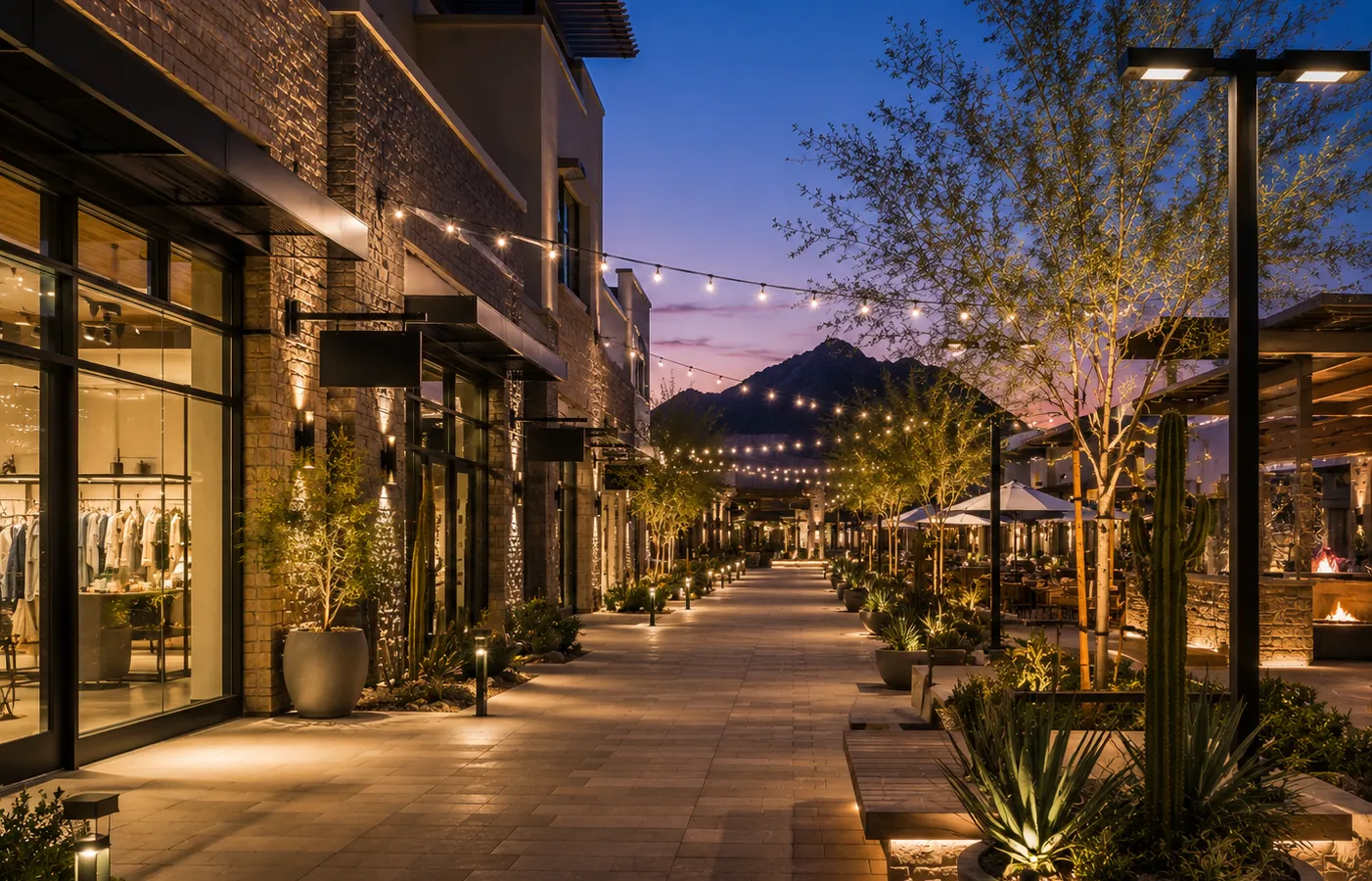
Thoughtful lighting design creates consistency from room to room and throughout the entire property.
Specifying lighting for a commercial build?
We help contractors and owners select fixtures for consistent color, smart placement, and long-term value — before installation begins.
New buildings still need long-term maintenance planning
Another common mistake is selecting fixtures without considering future maintenance requirements.
Building owners often focus on installation costs while overlooking long-term service needs.
Questions worth asking include:
- How long will these fixtures last?
- Will matching fixtures be available in the future?
- How difficult will maintenance be?
- What warranty protection exists?
- What are the replacement costs?
These considerations become increasingly important in large commercial properties where maintenance costs can quickly add up.
Lighting impacts more than visibility
Commercial lighting affects far more than a person’s ability to see.
It influences:
- Employee productivity
- Customer experience
- Tenant satisfaction
- Safety
- Security
- Building appearance
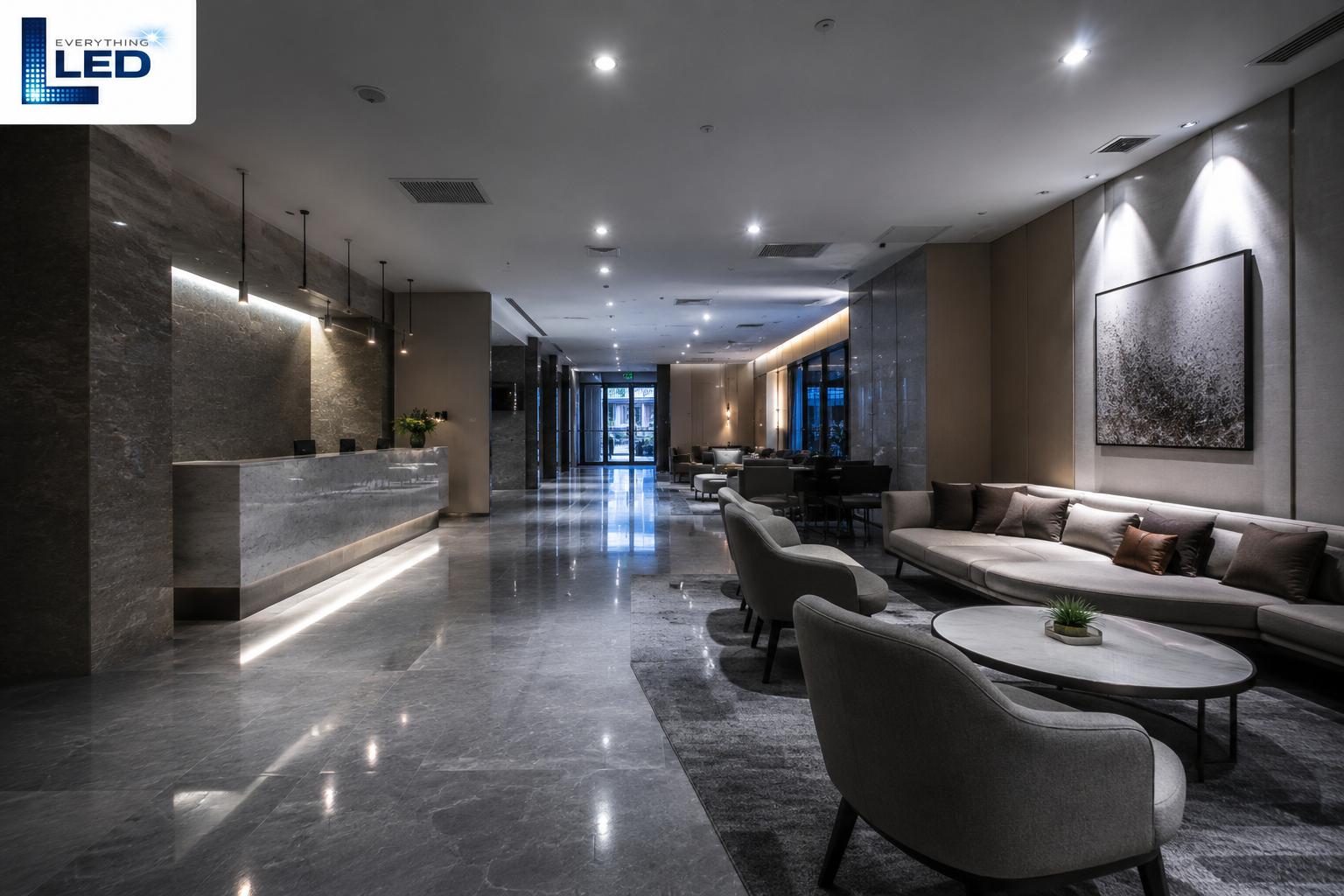
When lighting is done well, people rarely notice it.
When lighting is inconsistent, uncomfortable, or poorly planned, people notice immediately.
Great buildings deserve great lighting
A new building should not automatically mean accepting poor lighting.
The most successful commercial projects are built on thoughtful planning, quality products, and long-term thinking.
Fixture quality, placement, color temperature, efficiency, maintenance requirements, and future operating costs should all be part of the conversation before installation begins.
Because lighting should be an asset to the building, not an afterthought.
At Everything LED, we help contractors, developers, property managers, and commercial property owners select lighting solutions designed for performance, consistency, efficiency, and long-term value.
After all, great buildings deserve great lighting.