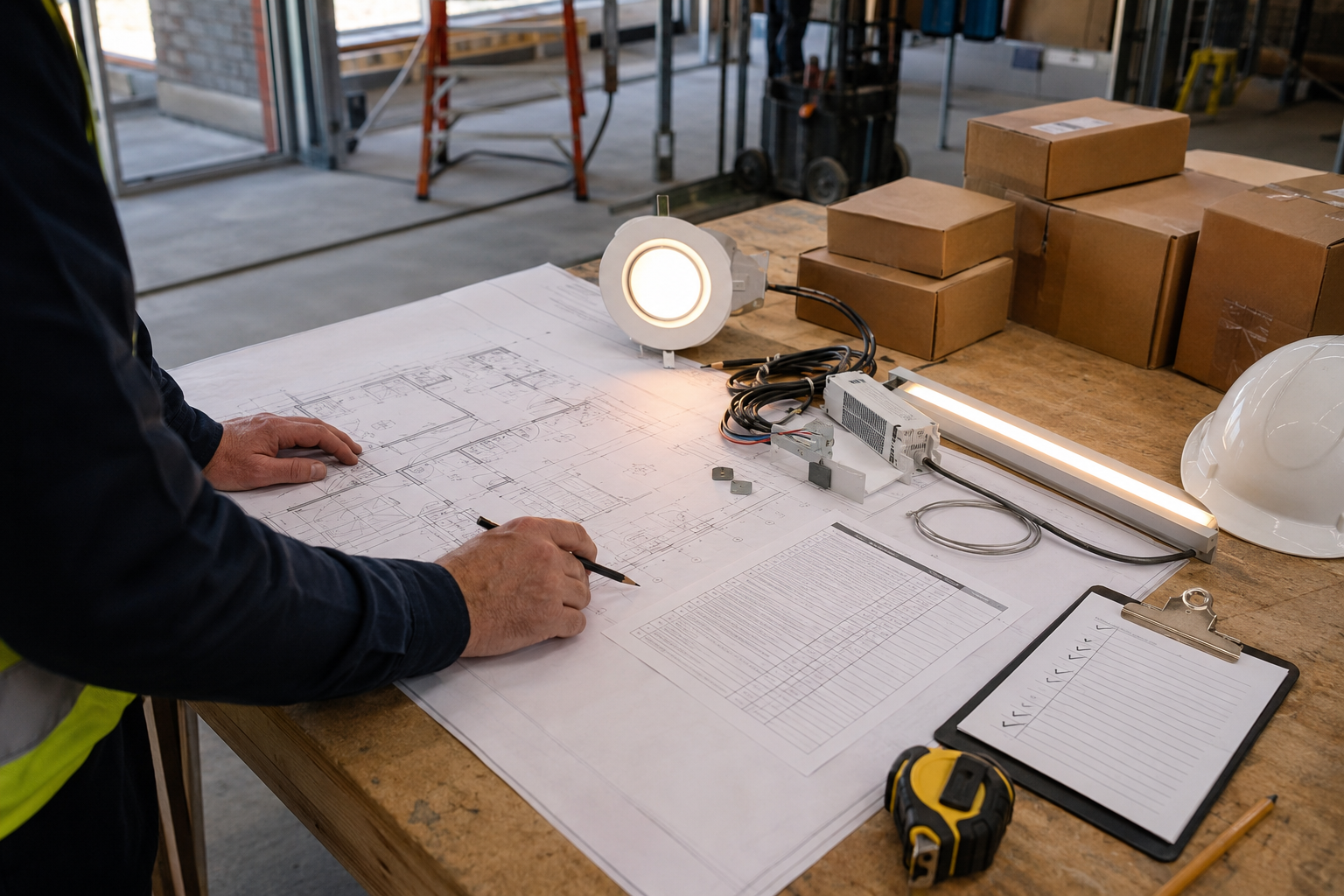
Every successful commercial lighting project starts long before the first fixture arrives on-site. Whether you’re working on a tenant improvement, a retail renovation, or a new commercial development, one document helps tie the electrical design, material procurement, and installation process together: the commercial lighting fixture schedule.
For general contractors, electricians, estimators, and project managers, understanding how to read a fixture schedule can prevent costly mistakes, reduce delays, and make ordering materials much more efficient. It serves as the roadmap for every lighting fixture specified on a project and provides the details needed to ensure each product is installed as intended.
If you’re new to reviewing commercial lighting plans—or simply looking to sharpen your understanding—here’s what a fixture schedule includes and why it plays such an important role in every commercial build.
What Is a Commercial Lighting Fixture Schedule?
A commercial lighting fixture schedule is a detailed chart included within a project’s electrical drawings. It lists every lighting fixture specified by the engineer or lighting designer, along with the technical information required for procurement and installation.
Instead of identifying fixtures by their full product descriptions throughout the plans, designers assign each one a letter or number. Those designations correspond to symbols shown on the reflected ceiling plan (RCP), allowing contractors to quickly identify which fixture belongs in each location.
Reading the reflected ceiling plan and fixture schedule together provides a complete picture of how the lighting system is intended to function throughout the building.
Fixture Tags and Symbols
One of the first steps in reviewing a lighting package is learning how fixture tags relate to the project drawings. A simple designation like “Fixture A” or “Type B” may seem straightforward, but those references connect directly to a much larger set of specifications.
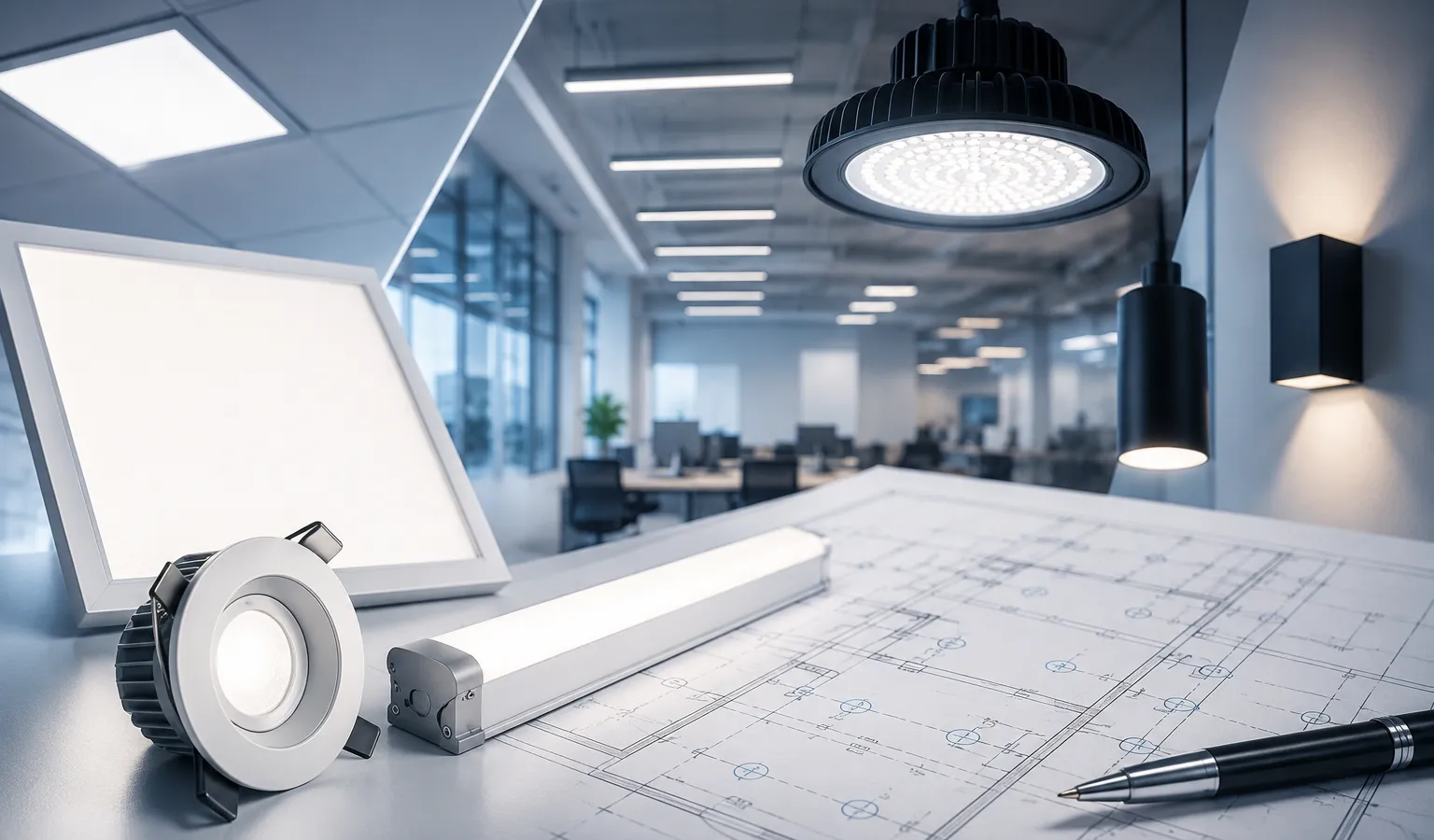
For example, one fixture designation may identify an LED flat panel used throughout office spaces, while another may reference suspended linear fixtures in conference rooms or decorative lighting in a reception area. Exterior wall packs, track lighting, downlights, and emergency fixtures all receive their own designations as well.
Rather than repeating lengthy specifications on every sheet, the fixture schedule organizes this information into one convenient reference. Once contractors know how to move between the drawings and schedule, reviewing lighting plans becomes much more efficient.
Fixture Specifications
After locating the correct fixture designation, review the technical specifications. This is where contractors confirm that every fixture matches the project’s electrical requirements, architectural design, and performance expectations before materials are ordered.
A typical fixture schedule includes:
- Operating voltage
- Lumen output and wattage
- Driver type
- Color temperature and Color Rendering Index (CRI)
- Mounting method
- Dimming or control requirements
- Emergency or battery-backup requirements
These details work together to define how each fixture will perform once installed. Reviewing them early helps identify potential issues before they affect the construction schedule and makes it easier to compare products if substitutions become necessary.
Mounting Methods
The fixture schedule also specifies how each lighting fixture is designed to be installed. This matters because installation requirements vary depending on the ceiling type and architectural conditions within the space.
A recessed LED panel designed for a suspended grid ceiling requires a different installation approach than a pendant-mounted linear fixture in an open office environment. Surface-mounted fixtures, wall-mounted luminaires, and exterior lighting each have their own hardware and installation considerations.
By reviewing mounting details before ordering, contractors can verify ceiling conditions, coordinate with other trades, and avoid unnecessary installation delays once work begins.
Color Temperature and Light Quality
Commercial lighting is about more than making a space brighter. Color temperature and light quality have a significant impact on how finished environments look and function.
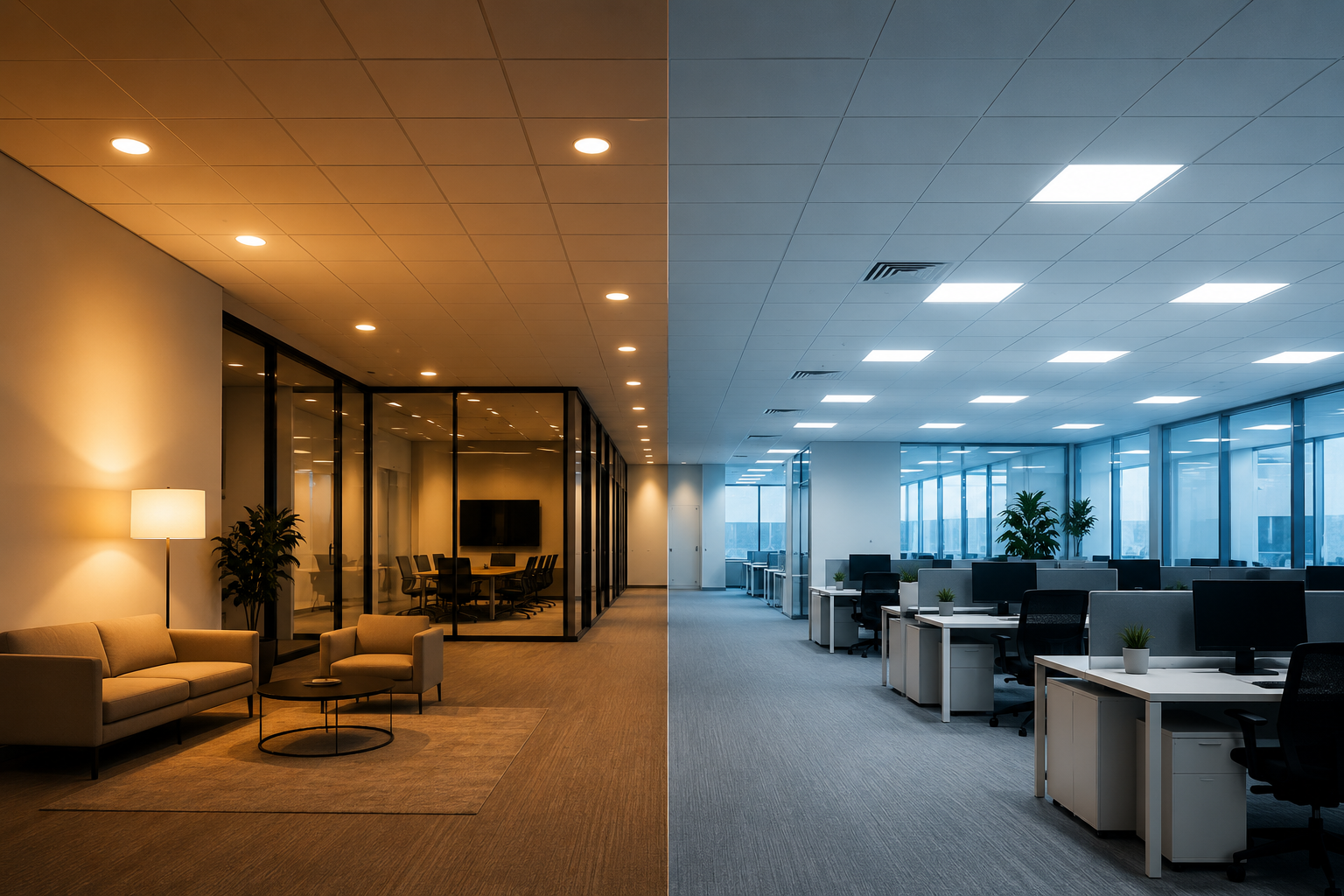
Office environments commonly use neutral white lighting around 4000K to create comfortable workspaces, while retail environments may need different color temperatures depending on the products displayed. Many commercial projects also specify minimum CRI requirements so finishes, merchandise, and architectural details appear natural under artificial lighting.
Maintaining consistency throughout the project is equally important. Mixing fixtures with different color temperatures can create visual differences that become obvious immediately after installation.
Controls and Code Compliance
Modern commercial buildings rely heavily on lighting controls to improve energy efficiency and satisfy current building codes. Fixture schedules often include information about dimming systems, occupancy sensors, daylight harvesting controls, and emergency lighting requirements.
These specifications are not optional accessories; they are often essential components of the overall lighting design. Verifying compatibility between fixtures, drivers, and control systems before procurement helps eliminate costly field changes and contributes to a smoother inspection process.
Check controls before ordering
A fixture can match the required wattage and output yet still be wrong for the job if its driver is incompatible with the specified dimming or control system.
Approved Equals and Value Engineering
Even well-planned commercial projects occasionally require substitutions. Manufacturer availability, project schedules, or lead times may make it necessary to identify an approved equivalent fixture.
An approved equal should provide comparable performance while maintaining the architect’s design intent. Contractors should evaluate light output, color temperature, CRI, mounting configuration, driver compatibility, controls, and warranty coverage before recommending a substitute.
Value engineering extends beyond selecting the least expensive fixture. The goal is to find products that deliver equivalent performance, reliability, and code compliance while improving availability or reducing total project cost.
When approached thoughtfully, value engineering benefits everyone involved—from the owner and design team to the contractors responsible for installation.
Common Mistakes
Many lighting-related construction delays stem from small oversights during review rather than major design issues.
Common mistakes include:
- Ordering before reviewing the latest drawing revisions
- Overlooking control or emergency-lighting requirements
- Assuming visually similar fixtures are interchangeable
- Missing differences in voltage, mounting, or driver specifications
- Failing to verify lead times before releasing an order
Carefully reviewing the fixture schedule before procurement reduces these risks and gives the project team greater confidence as construction moves forward.
Have a fixture schedule ready for review?
Send us the schedule, plans, and project timeline. We’ll help review specifications, availability, and equivalent options before materials are released.
How Everything LED Supports Commercial Construction
Commercial lighting projects require more than quality products—they require knowledgeable support throughout every stage of construction.
Everything LED works with contractors, electricians, estimators, architects, and project managers to review fixture schedules, identify approved equivalent products, coordinate availability, and assist with commercial lighting packages for projects of all sizes.
Whether you’re managing a tenant improvement, office renovation, retail build-out, or large commercial development, an experienced lighting partner can simplify procurement, reduce uncertainty, and help keep construction schedules on track.
The more familiar contractors become with fixture specifications, controls, mounting methods, and approved substitutions, the easier it becomes to avoid delays and deliver successful projects.