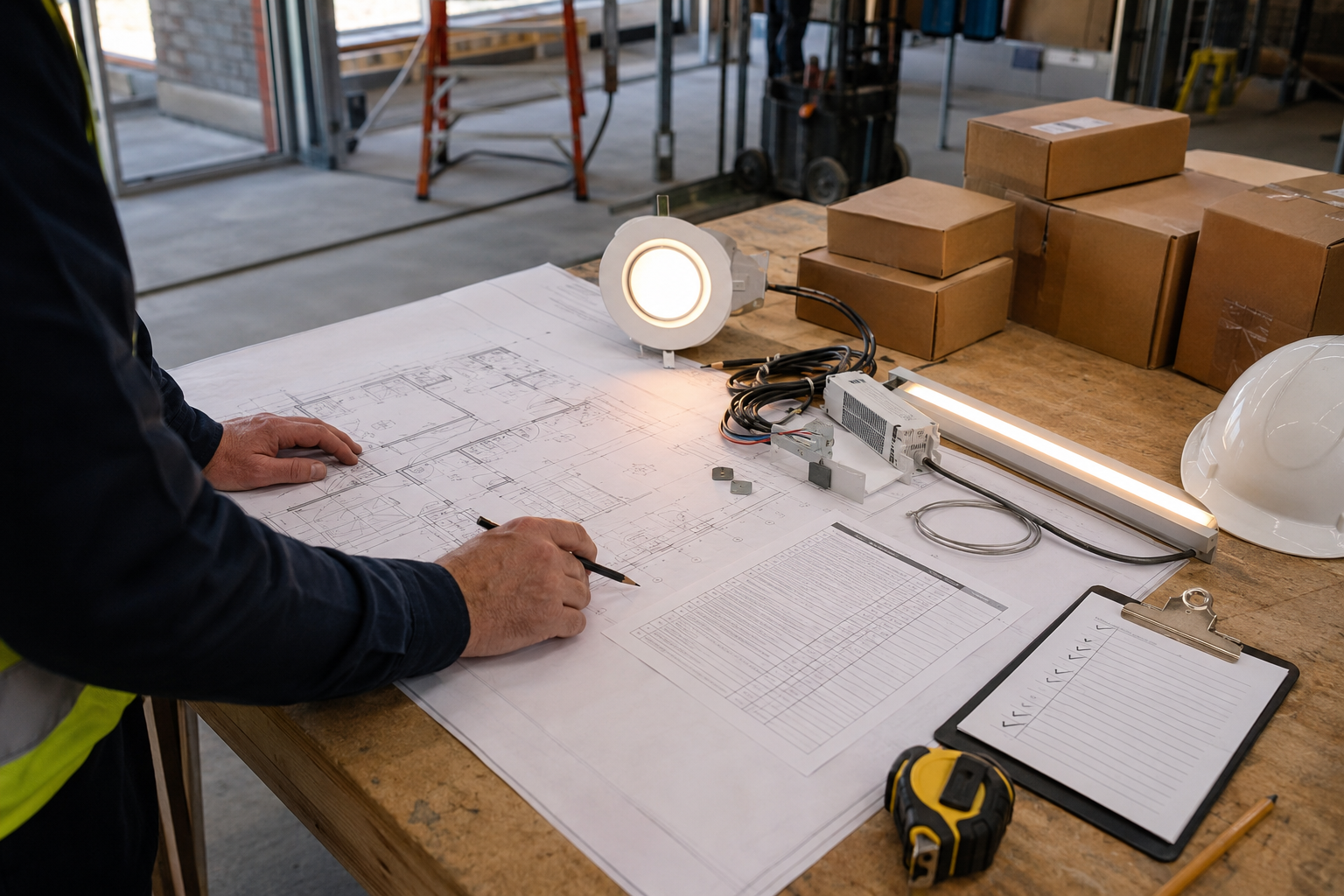
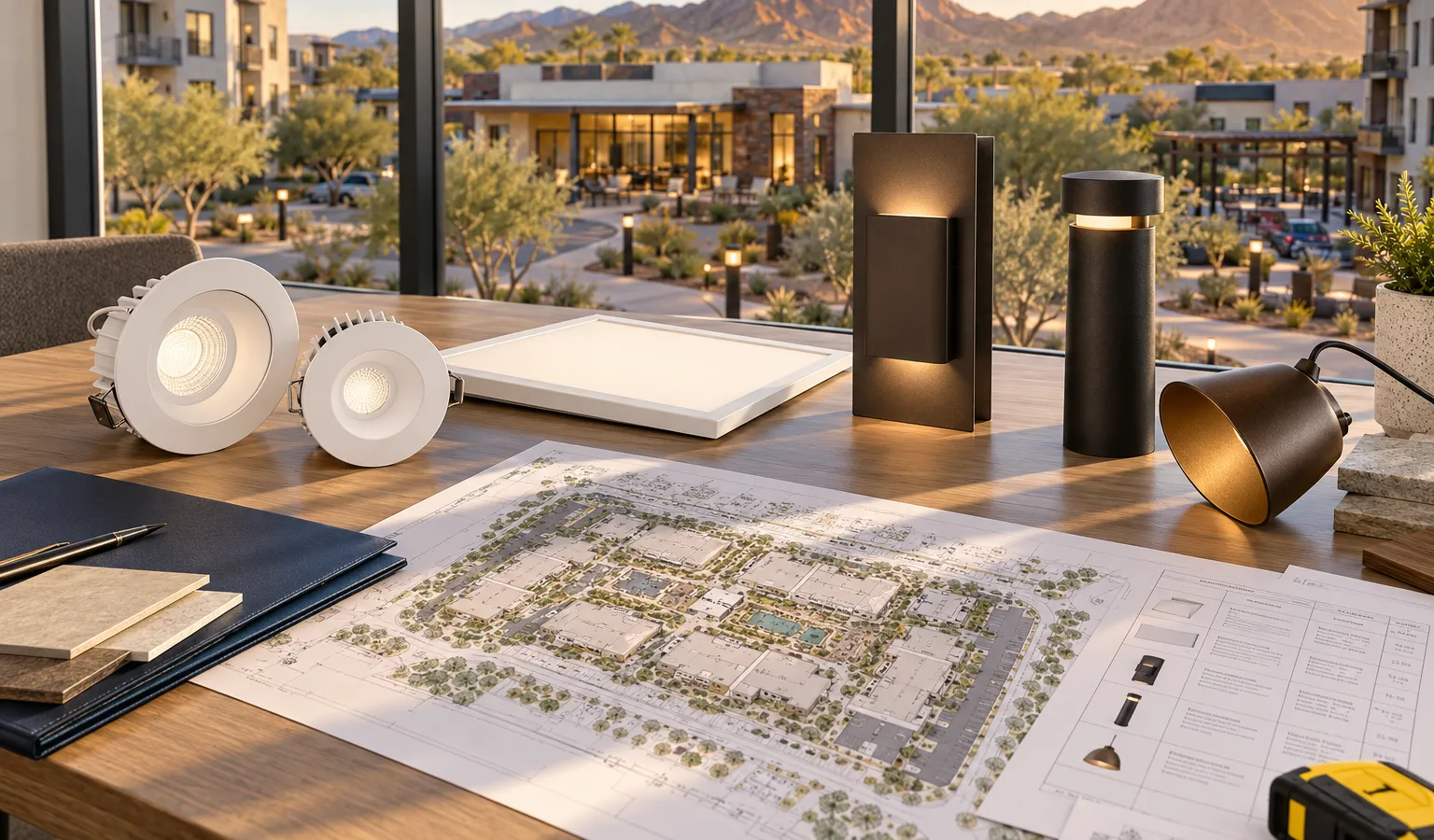
The apartment interiors need downlights. The corridors need another fixture type. The clubhouse has decorative pendants, while the parking lot, pathways, and building entrances each have their own requirements.
On a multifamily, hospitality, or commercial project, those needs can turn into several separate purchasing conversations. Before long, different teams may be pricing different parts of the property using different information.
Planning the lighting package as a whole gives everyone a clearer starting point. It helps connect what the property needs with what will be purchased, where it belongs, and when it needs to arrive.
Start with the whole property
Before requesting pricing, identify the areas included in the lighting scope. Apartment units, hotel rooms, corridors, stairwells, shared amenities, service areas, and exterior spaces may appear on different drawings or purchasing schedules.
A package review should bring those requirements together. That includes identifying fixtures already specified, areas still awaiting selections, and components that may be purchased separately.
For example, decorative fixtures selected by the owner may need to be coordinated with the rest of the package even when they come through a different purchasing channel. Making that distinction early helps the team understand what the supplier’s quote includes and which items still need attention.
Use the fixture schedule to connect the details
The fixture schedule helps connect product requirements to the project drawings. Fixture marks identify the types being specified, while the accompanying information describes requirements such as output, voltage, mounting, controls, and emergency components.
Read the schedule alongside the current plans, specifications, and addenda. Our guide to reading a commercial lighting fixture schedule explains how these details support purchasing decisions.
Quantities also need to be tied to the project scope. If the quote covers multiple buildings, phases, or alternates, identify those divisions clearly. A supplier needs to know whether a quantity represents the first building, the entire development, or an optional portion of the work.
Define consistency where it matters
A coordinated package does not mean using the same fixture everywhere. A parking area and a hotel lobby have different lighting needs.
Consistency means making deliberate choices within related spaces. Repeated apartment interiors may need matching fixtures and finishes. A corridor may need a consistent appearance from one end to the other. Exterior fixtures may need to complement the property’s architectural style.
Document the exact models, finishes, and specified light characteristics for those repeated applications. If an alternative product is proposed, review how it affects both the individual location and the surrounding spaces. Proposed substitutions should receive the appropriate project approval before purchasing.
Include the components around the fixture
The fixture itself may be only part of the order. Depending on the product and application, the package may also need drivers, mounting hardware, channels, connectors, control components, or emergency accessories.
Confirm what is included with each quoted product and what must be ordered separately. Installation requirements should be reviewed with the electrical contractor before the purchasing decision is finalized.
That conversation helps connect the supplier’s product information with the conditions the installation team will encounter. It also gives the project team a clearer understanding of the complete material scope.
Plan deliveries around the construction sequence
A property-wide package may be purchased together but needed at different times. The first building could be ready for fixtures while another is still in an earlier stage of construction.
Share the sequence with the supplier. Identify required delivery dates, receiving arrangements, available storage, and any areas where the schedule remains uncertain.
Ask how availability and pricing apply across the planned phases. Confirm the quote’s validity, any conditions attached to phased purchasing, and how changes will be handled. Those details should be understood before the team builds its material budget around the package.
Make the purchasing responsibilities clear
A coordinated order also needs clear ownership. Who confirms quantities? Who approves substitutions? Who releases the purchase and receives the shipment?
General contractors can work directly with Everything LED Lighting on package pricing and purchasing, then hire their electrical contractor separately for installation.
Electrical contractors can bring us their next lighting package to discuss pricing, product options, and availability for the work they are preparing to install.
Either approach benefits from the same starting point: a defined scope, current project information, and a shared understanding of responsibilities.
Bring us the package before you place the order
Everything LED Lighting supplies commercial LED lighting for Arizona multifamily, hospitality, and commercial projects. We work with project teams on fixture sourcing, package pricing, purchasing, and delivery planning.
Bring us your plans, fixture schedule, quantities, and construction timeline. Tell us which selections are final and where you still need options.
Request a project quote and start the conversation about a lighting package that fits the whole property.
Frequently Asked Questions
Does a property-wide lighting package need to use one manufacturer?
Not necessarily. Different applications may call for products from different manufacturers. The goal is to coordinate the selected products with the project’s specifications, appearance, installation requirements, and purchasing scope. Repeated applications should have clearly documented selections so the team knows what to order.
What should we provide when requesting a lighting package quote?
Provide the current fixture schedule, relevant plans and specifications, quantities, project location, and required delivery dates. Identify phases, alternates, owner-selected fixtures, and any components being purchased separately. Explain which selections are approved and which still need review.
Can deliveries be planned around multiple buildings or phases?
Discuss the construction sequence and required dates with Everything LED Lighting during quoting. Delivery arrangements depend on the products, availability, and agreed order terms. Confirm those details before purchasing rather than assuming the entire package can arrive whenever each phase needs it.