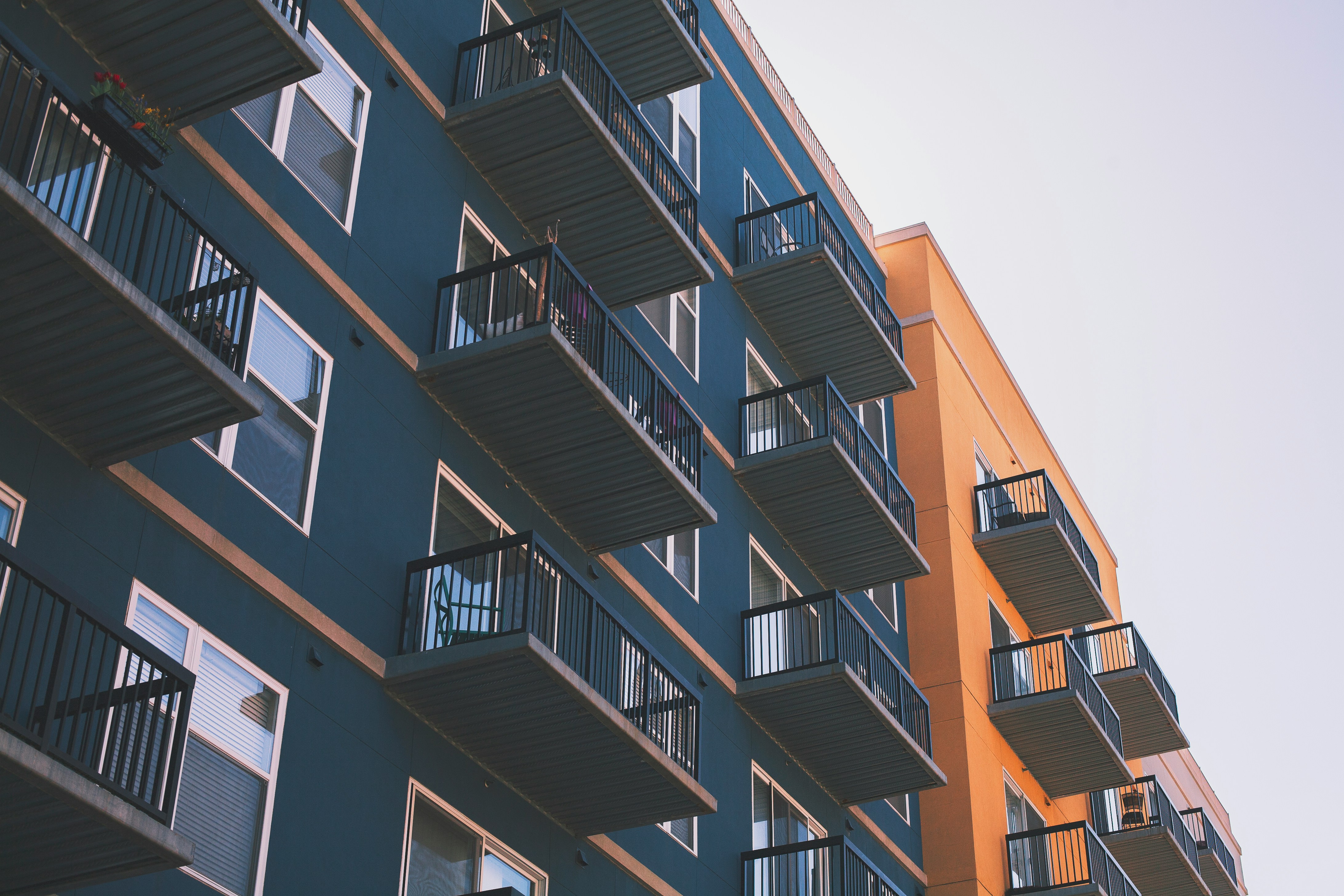
On a large hotel or apartment project, a lighting decision that seems small on the submittal can repeat itself hundreds of times across the property.
That changes the math.
A fixture that saves a few minutes during installation may save days across several buildings. A replacement part that seems inexpensive may become a major maintenance issue when it is needed in 40 corridors. A fixture that looks perfect today can become frustrating five years from now if the original model is no longer available and nothing else matches it.
One decision that deserves more attention is whether to use a lamp-ready fixture or an integrated LED fixture.
Both can provide efficient, dependable commercial lighting. Neither is automatically the better choice. The right answer depends on where the fixture will be installed, how important its appearance is, how it will be controlled and who will need to maintain it after the construction team leaves.
What is a lamp-ready LED fixture?
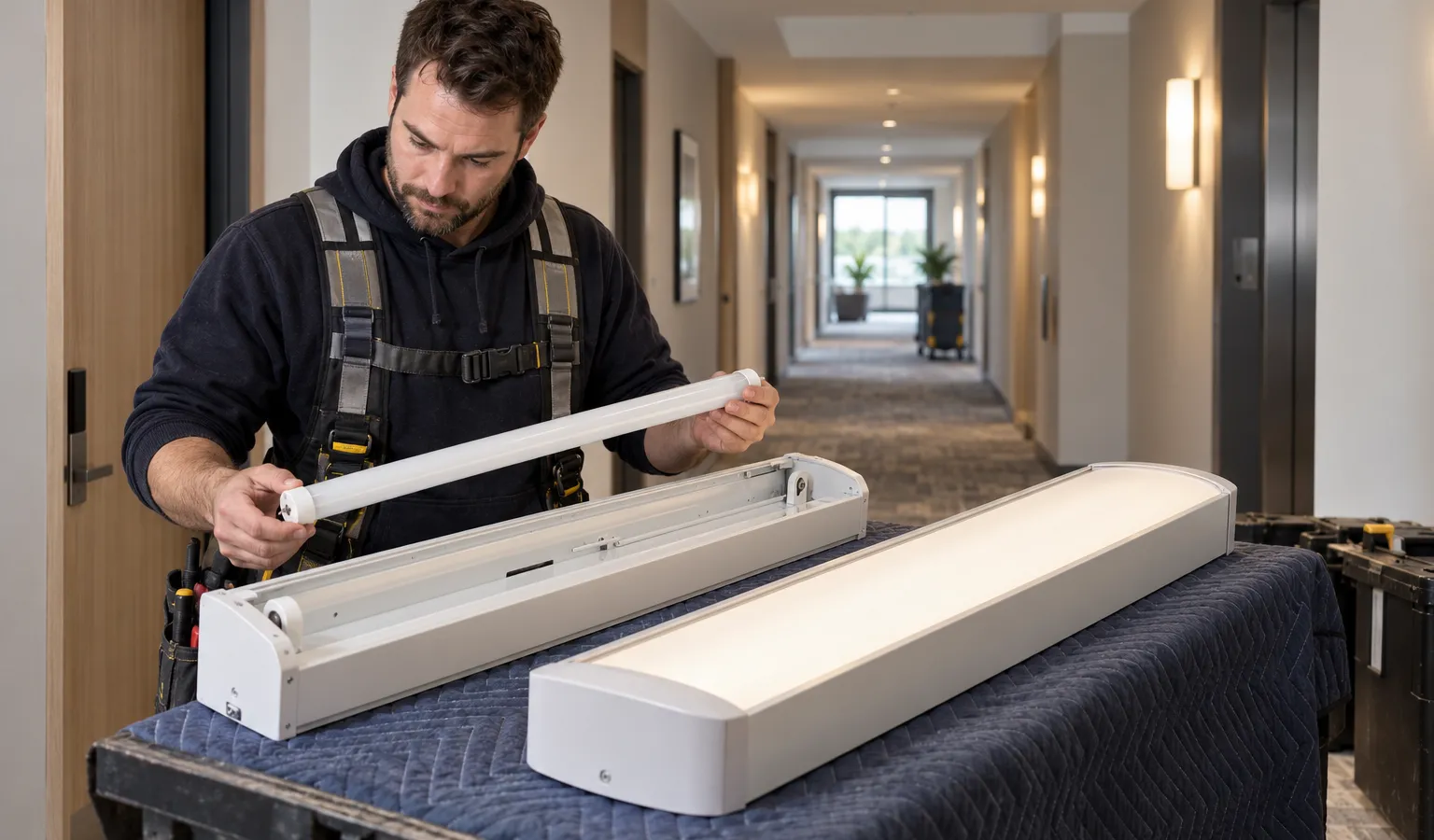
A lamp-ready fixture is the housing, sockets and other fixture components without a permanently built-in LED light source. The installer supplies the compatible LED lamp separately.
In a linear fixture, that may mean installing replaceable T8 LED tubes. Some newer commercial wraps and strips are factory-wired specifically for ballast-free Type B LED tubes. The contractor can choose the lamp wattage and color temperature when ordering the project instead of being locked into one factory configuration.
Because the lamp can be removed, future maintenance may be as straightforward as replacing the tube rather than replacing the entire fixture.
That simplicity is attractive in frequently used, practical spaces such as apartment corridors, stairwells, laundry rooms, storage areas, maintenance rooms and hotel back-of-house areas.
However, “lamp-ready” does not mean that any tube can be installed safely. Type A, Type B and Type C LED tubes use different electrical arrangements. UL Solutions explains that Type B lamps operate from lampholders wired directly to the branch circuit. The fixture, lamp, wiring method and listing all need to agree.
What is an integrated LED fixture?
An integrated LED fixture has the LED light source and driver designed as part of the luminaire. There is no traditional bulb or tube to remove.
This allows manufacturers to design compact fixtures with controlled optics, even diffusion and shapes that would be difficult to create around a replaceable lamp. Integrated fixtures are common in surface-mounted disks, downlights, vanity bars, decorative luminaires, wall packs, canopy lights and architectural fixtures.
They often make sense in guest rooms, apartment interiors, lobbies, clubhouses, leasing offices and amenity spaces where appearance, comfort and light distribution matter as much as basic illumination.
An integrated fixture is not necessarily disposable. Depending on the product, its driver or LED module may be serviceable. But there is no universal replacement lamp. The maintenance path depends heavily on the manufacturer, fixture construction, warranty and continued availability of compatible components.
That is why “the LEDs last for years” should not be the end of the conversation. The U.S. Department of Energy notes that quality LED products commonly have a useful life of 30,000 to 50,000 hours or longer, but also explains that electronic components can fail before the LEDs themselves. Long life is valuable, but the complete fixture still needs to be selected with maintenance in mind.
Where lamp-ready fixtures can make practical sense
Lamp-ready fixtures are often strongest where access is relatively easy, appearance is straightforward and the owner wants maintenance staff to replace a familiar component from stock.
Consider a multifamily property with the same linear fixture in every storage room, maintenance area and service corridor. If the property keeps the correct replacement lamps on hand and clearly documents the required wiring type, a lamp-ready system can be simple to support.
The same may be true in hotel laundry rooms, housekeeping areas and other operational spaces where dependable light and fast maintenance matter more than a specialized fixture profile.
Lamp-ready fixtures may also give contractors some flexibility during procurement. For example, NICOR’s current lamp-ready commercial wrap allows the installer to select the wattage and color temperature through the separately purchased Type B lamp. That can be useful when similar housings serve spaces with different light-level requirements.
The tradeoff is that flexibility must be managed. If different lamp brands, color temperatures or outputs are installed over time, the property can develop a mismatched appearance. Clear labeling and an accurate closeout schedule are essential.
Where integrated LED fixtures usually have the advantage
Integrated fixtures tend to win when the fixture needs to be slimmer, more visually refined or more precisely controlled.
In a hotel corridor, light distribution and glare can determine whether the space feels calm and welcoming or harsh and institutional. In an apartment bathroom, an integrated vanity fixture may deliver more even illumination than visible replacement lamps. In a clubhouse or lobby, the fixture itself may be part of the interior design.
Integrated products can also make controls easier to coordinate when sensors, dimming, emergency operation or selectable wattage and color temperature are part of the fixture package. That does not mean every integrated product will work with every control. The driver and control protocol still need to be confirmed before ordering.
This connects directly to the larger question of how lighting shapes the hotel experience. Guests and residents may never know which fixture type was specified, but they notice uncomfortable glare, uneven hallways and rooms that feel too cold or too dim.
The real comparison is total project cost
Fixture price matters, but it is only one line in the actual cost of a lighting system.
For contractors, installation labor, assembly time, wiring and commissioning all affect the bid. For owners and facility teams, access, replacement labor, stocking, warranties and future product availability continue affecting the property long after turnover.
A lower-cost lamp-ready fixture may be a strong value if the correct replacement lamps will remain easy to obtain. It may be a poor value if future crews install incompatible tubes or mix color temperatures throughout the property.
An integrated fixture may cost more initially but deliver better optics, faster installation or a more finished appearance. It may become expensive later if the entire luminaire must be replaced and the original style is no longer available.
The correct comparison is not lamp price versus fixture price. It is the expected cost and performance of the complete system across its useful life.
Large properties make consistency a procurement issue
Hotels and multifamily communities are rarely completed one fixture at a time. A project may involve hundreds of units, multiple buildings and several construction phases.
That makes consistency especially important.
If replacement lamps are used, the project team needs to lock in the correct base, wiring type, wattage, color temperature and color quality. If integrated fixtures are used, the team needs confidence that the selected family, finish and output will remain available as later phases are built.
This is one reason commercial LED lighting for multifamily communities and hotels should be sourced as a property-wide package rather than a series of unrelated orders. Submittals, approved alternates, attic stock and closeout documents all help protect the original design after turnover.
A few dollars saved through an unreviewed substitution can disappear quickly when the punch walk reveals noticeably different light colors in the same corridor.
Most projects do not need to choose only one
For many hospitality and multifamily projects, the smartest answer is a combination.
Lamp-ready fixtures may serve utility rooms, service corridors and other practical spaces where simple relamping is valuable. Integrated fixtures may serve guest rooms, apartment interiors, lobbies, amenity spaces and exterior applications where appearance, optics, environmental ratings or controls carry more weight.
The goal is not to force one fixture philosophy across the entire property. It is to use each approach where its strengths provide the greatest value.
The same thinking applies outdoors. Parking areas, walkways, canopies and building entrances each have different performance and maintenance needs. Our guide to outdoor hotel lighting explains why distribution, glare, temperature ratings and replacement availability need to be evaluated together.
Questions contractors should answer before ordering
Before approving either a lamp-ready or integrated LED fixture, confirm:
- Where will the fixture be installed, and how difficult will it be to access?
- Who will maintain it after turnover?
- What exact lamp, driver or module will be needed later?
- Are dimming, sensors or emergency functions required?
- Will the same fixture or a compatible replacement be available for later phases?
- Does the warranty cover the whole fixture, the driver, the lamp or different components for different periods?
- Is attic stock included, and are replacement requirements documented clearly?
- Does the product meet the project’s listing, energy-code and rebate requirements?
Those questions are far less expensive to answer before the purchase order is issued.
Choose the fixture for the years after installation
The lighting package still needs to work after the electrician finishes, the GC closes the project and the first residents or guests arrive.
Lamp-ready fixtures can offer familiar maintenance and replaceable light sources. Integrated LED fixtures can provide refined appearance, efficient optical performance and compact designs. Either can be the right choice when it is matched thoughtfully to the application.
The mistake is choosing based only on the lowest fixture price or assuming every LED product will be equally easy to maintain.
Everything LED Lighting helps contractors, developers and property teams source commercial LED fixtures for multifamily and hospitality projects throughout Arizona. We help compare products, maintain consistency across phases, coordinate lead times and think through what the property will need long after installation.
Because the best lighting package is not simply the one that installs successfully. It is the one the owner can still operate, maintain and match years later.
Frequently Asked Questions
Are lamp-ready LED fixtures better than integrated LED fixtures?
Not automatically. Lamp-ready fixtures can simplify relamping in practical, accessible spaces. Integrated fixtures can provide better optics, compact designs and a more finished appearance. The best choice depends on the application, controls, maintenance plan and long-term product availability.
What is a Type B LED tube?
A Type B LED tube operates directly from line voltage rather than through a fluorescent ballast. The fixture and lampholders must be wired for the lamp’s approved configuration, and the product instructions and safety listing must be followed.
Do integrated LED fixtures have to be replaced when they fail?
Sometimes, but not always. Some products have replaceable drivers or LED modules. Others are serviced by replacing the complete fixture. Contractors should confirm the manufacturer’s service procedure, warranty and component availability before ordering.
Which fixture type is best for apartment corridors and hotel back-of-house areas?
Lamp-ready linear fixtures can be useful when simple relamping and stocking are priorities. Integrated wraps, strips and surface fixtures may offer better diffusion, controls or installation features. Accessibility, appearance and the owner’s maintenance capabilities should guide the decision.
Why does fixture availability matter on phased construction?
Multifamily and hospitality projects may be built or renovated over several months or years. If the original fixture disappears, later phases can have different dimensions, finishes, output or color temperature. Product-family continuity and approved alternates should be addressed during procurement.
Need help comparing fixtures for a project?
Share the property type, fixture schedule and construction timeline. Everything LED Lighting can help evaluate lamp-ready and integrated options, confirm availability and build a consistent package across the property.