The fixtures are installed. The switches work. The punch list is almost finished. On paper, the lighting looks complete.
Then someone walks through the property after dark and notices that the hotel lobby feels harsh. An apartment corridor has bright spots followed by shadowy sections. The clubhouse lights shut off while residents are sitting still. The exterior fixtures come on too late, and the property manager has no idea how to change the schedule.
Nothing is obviously broken, but the property does not feel finished.
That difference matters. People experience lighting through comfort, visibility and ease. They rarely think about fixture specifications or control settings. They notice whether a space feels welcoming, safe and easy to use.
Lighting Is Experienced, Not Just Measured
A lighting plan can meet the required numbers and still feel wrong in the completed space. Drawings cannot fully show how light will reflect from finished walls, flooring, glass, artwork and furniture. They also cannot recreate every hour of operation.
That is why the final walk matters. Contractors and property teams should look beyond whether every fixture turns on. They should ask how the space feels at the times when people will actually use it.
A leasing office may look excellent at noon but feel flat in the evening. A hotel entry may seem bright enough during construction yet feel uninviting after the decorative finishes and furniture are installed. A corridor can meet the plan while still creating uncomfortable pools of light.
The Lobby Feels Too Bright After Dark
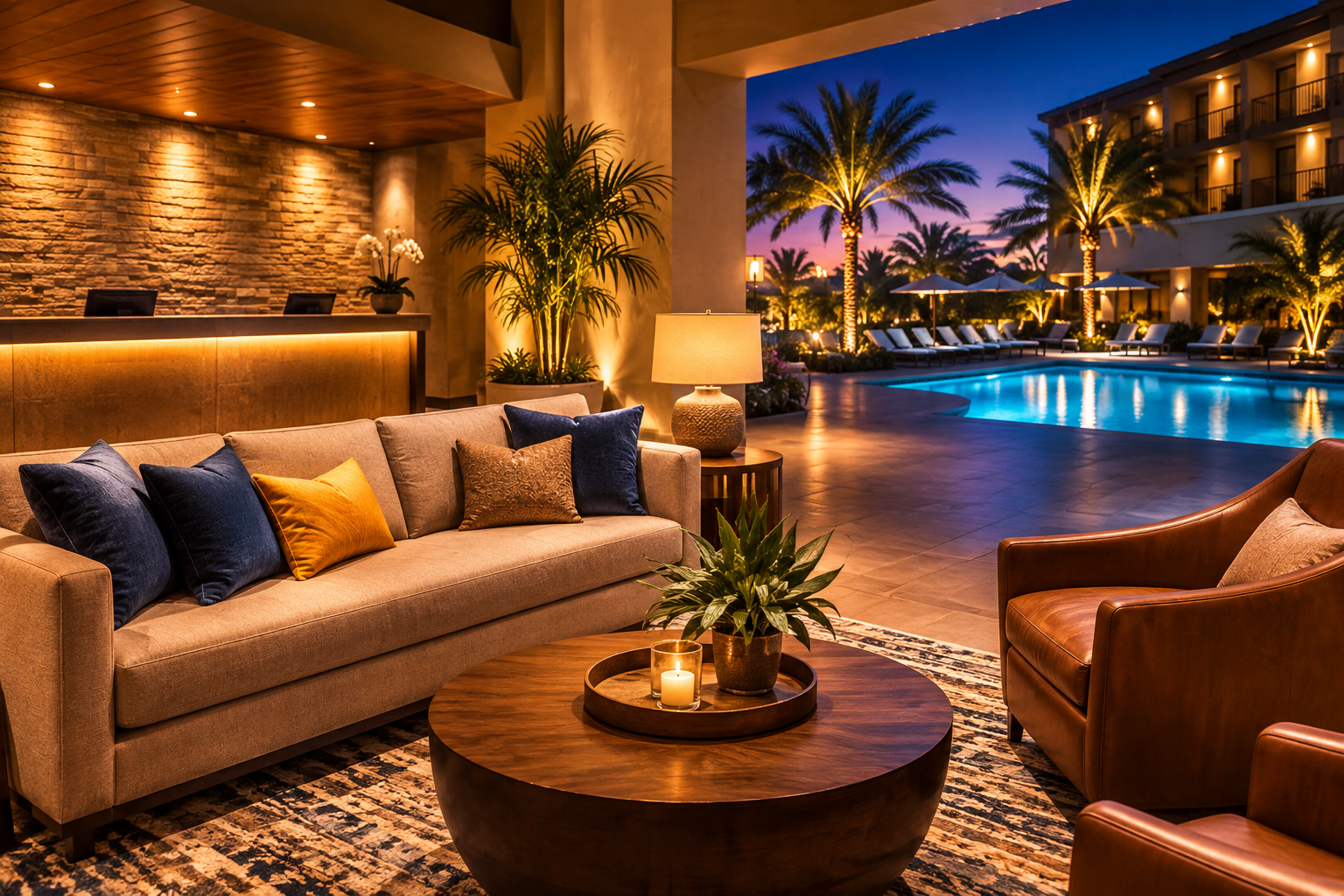
Hotel lobbies and multifamily common areas often need to change throughout the day. Bright daytime lighting can help a busy front desk or leasing team. The same level may feel cold once the sun goes down.
Evening lighting should support the mood of the property without making guests or residents struggle to see. If the ceiling lights overpower decorative fixtures, artwork or seating areas, the space can feel more like a work zone than a place to arrive and settle in.
The fix may be as simple as adjusting a dimming level or evening setting. The important part is viewing the finished room after dark and making the adjustment before the project team leaves.
Corridors Feel Uneven or Uncomfortable
Corridor lighting is repeated across hotels and apartment communities, so a small issue can affect dozens of spaces. Fixtures may be spaced correctly on the plan but appear uneven after wall colors, door finishes and flooring are installed.
Light and color are closely connected. Our guide to why paint and interior finishes look different under LED lighting explains why a finish that looked warm in the showroom may appear dull, gray or overly yellow under a different light source.
Walk several corridors instead of checking one representative area. Look at corners, elevator landings, doorways and transitions between indoor and outdoor spaces. Those are the places where uneven brightness and awkward shadows are easiest to notice.
Sensors Interrupt Real Life
Occupancy sensors save energy, but they should not make people wave their arms to keep the lights on. A clubhouse, fitness room or meeting area can go dark while someone is reading, stretching or working quietly. A stairwell or parking area can feel unsafe if the next section does not brighten until a person is already inside it.
Testing a sensor takes more than walking past it once. Sit in the room. Use the equipment. Enter from every doorway. Follow the same path a guest, resident, housekeeper or maintenance employee would take.
If the sensor cannot see part of the space or the lights turn off too quickly, the setting or placement may need attention. Catching that problem before turnover is much easier than returning after complaints begin.
Exterior Lighting Looks Fine During the Day
Exterior fixtures are difficult to judge in bright Arizona daylight. A daytime walk can confirm locations and installation quality, but it cannot show whether the property feels comfortable after sunset.
Return after dark when possible. Walk from the parking area to the entrance. Follow the sidewalks. Check stairs, building numbers, gates, trash areas and corners around the property. Notice whether people move from one well-lit area into sudden darkness.
Also look for light entering apartment windows or hotel rooms. More light is not always better. Good exterior lighting helps people see where they are going without creating glare or making sleeping spaces unnecessarily bright.
The Property Team Cannot Adjust Anything
A system can work perfectly at turnover and still become a problem if the property team cannot manage it. Staff should know how to change a schedule, select an evening setting and use a temporary override. They should also know who to call when something stops responding.
This does not require a long technical class. A practical walkthrough and a short written guide are often more useful. Show the team the controls they will actually use, make sure the correct person has access and leave the final settings with the property records.
Walk the Property Like a Guest or Resident
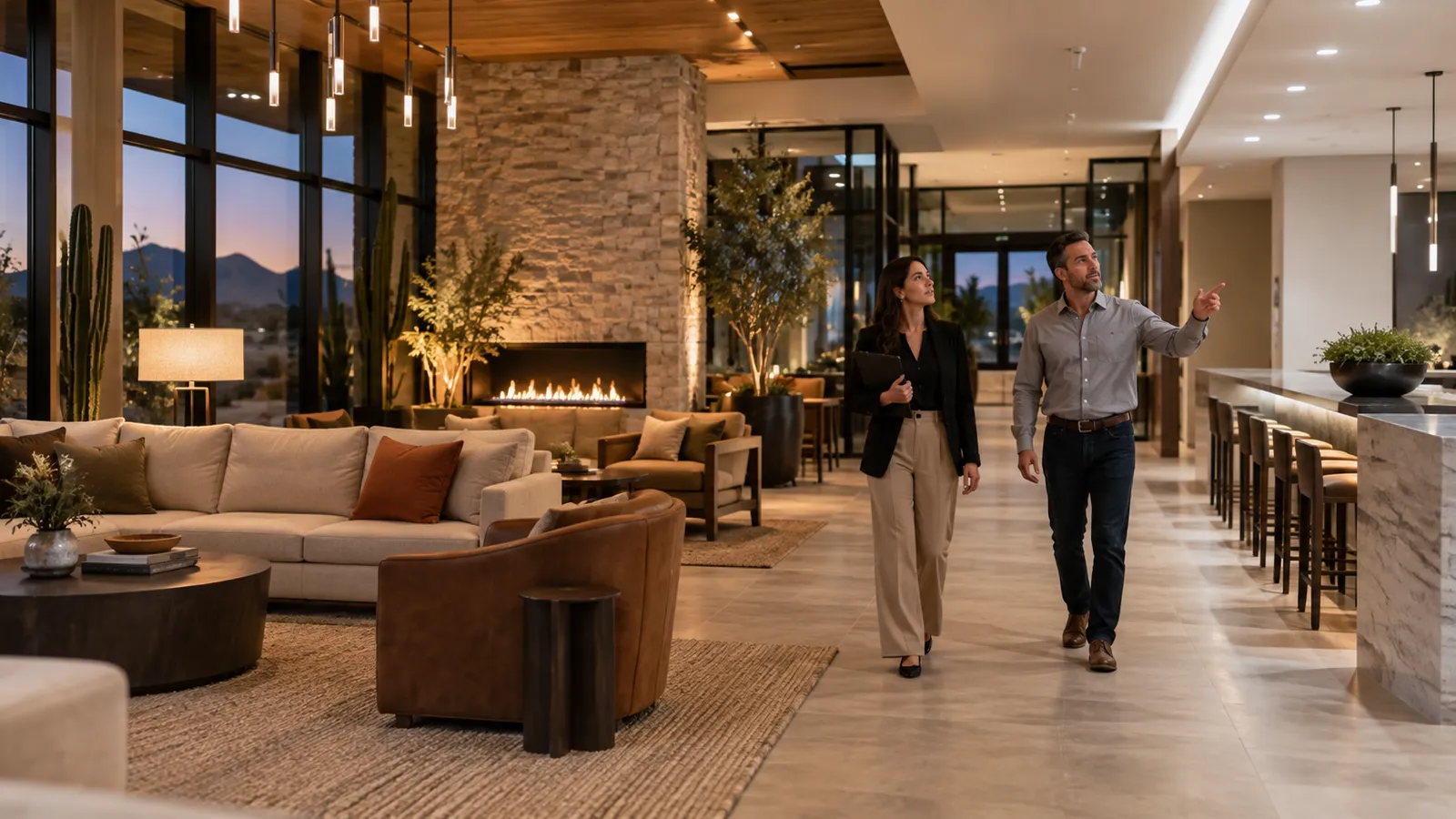
The best final review is simple. Stop looking at the lighting as a list of installed products and move through the building as a person who lives, works or stays there.
Arrive through the main entrance. Stand at the front desk. Walk the longest corridor. Sit in the clubhouse. Use the fitness room. Follow the path from the parking area to an apartment or guest room. Repeat part of the walk after sunset.
The project team will usually spot issues that are easy to miss during a quick construction walkthrough. One setting may need to be lowered. A sensor may need more time. A dark corner may need attention. These are often small adjustments, but they change how finished the entire property feels.
Before You Sign Off
Before hotel or apartment lighting is treated as complete, confirm that the team has:
- Walked the main guest and resident paths during the day and after dark
- Viewed lobbies, corridors and amenity spaces with the finishes and furniture in place
- Tested sensors by using the room normally, not only by walking past them
- Confirmed that exterior lighting supports visibility without excessive glare
- Shown the property team how to use everyday settings and schedules
- Left current fixture and control information with the owner
Many of these problems can also be prevented before products are ordered. The commercial lighting pre-order checklist for contractors helps project teams compare the fixture schedule, controls and field conditions before installation begins.
A Finished Lighting System Should Feel Finished
Guests and residents may never know why one property feels comfortable and another feels harsh. They simply know how the space makes them feel.
For the contractor, owner and property team, that experience is worth checking before the keys change hands. A thoughtful final walk can prevent complaints, reduce callbacks and protect the work everyone put into the project.
It can also keep a few late lighting details from interfering with closeout. We cover several common trouble spots in lighting delays that hold up construction timelines.
Everything LED Lighting helps Arizona project teams coordinate commercial LED fixture packages for hotels, apartment communities and shared amenity spaces. Send us your fixture schedule or project requirements and we will help you review the package before it reaches the field.
Frequently Asked Questions
Why can new LED lighting feel too harsh?
The light level may be too high for the time of day, the color may not suit the finishes, or glare may be coming from visible light sources. Viewing the finished space and adjusting the settings can often improve the result.
When should a hotel or apartment lighting walk happen?
Complete the walk after the main finishes and furniture are in place, but before final turnover. Include an after-dark review for exterior areas, entries, corridors and evening common spaces.
Who should join the final lighting walk?
Include the contractor or electrical team and the owner or property representative who understands daily operations.