Customers begin forming an opinion about a store before anyone welcomes them, offers assistance, or explains what makes the business different.
They notice whether the entrance feels inviting. They see which products naturally catch their attention. They sense whether the space feels polished, comfortable, energetic, luxurious, or difficult to navigate.
Much of that first impression is created by lighting.
Retail lighting does more than make merchandise visible. It guides customers through the space, communicates the personality of the brand, and influences how products, colors, finishes, and people look inside the store.
Before an employee says a single word, the lighting is already speaking.
The Entrance Sets the Expectation
The entrance is the transition between the outside world and the experience the retailer has created inside.
If the entry feels dark, flat, or visually disconnected from the rest of the space, customers may hesitate without consciously understanding why. If it is overly bright, the transition can feel harsh and unwelcoming.
Well planned entrance lighting creates a clear visual invitation. It helps customers identify the doorway, understand where to go, and get an immediate sense of the store’s atmosphere.
A luxury boutique may use warm, focused illumination and decorative fixtures to create intimacy. A sporting goods retailer may use brighter, more energetic lighting to signal activity. A neighborhood shop may choose a softer, familiar feeling that encourages customers to slow down and look around.
The correct solution depends on the brand, but the goal is the same: make the entrance feel intentional.
Displays Tell Customers Where to Look
Not every product should receive the same visual emphasis.
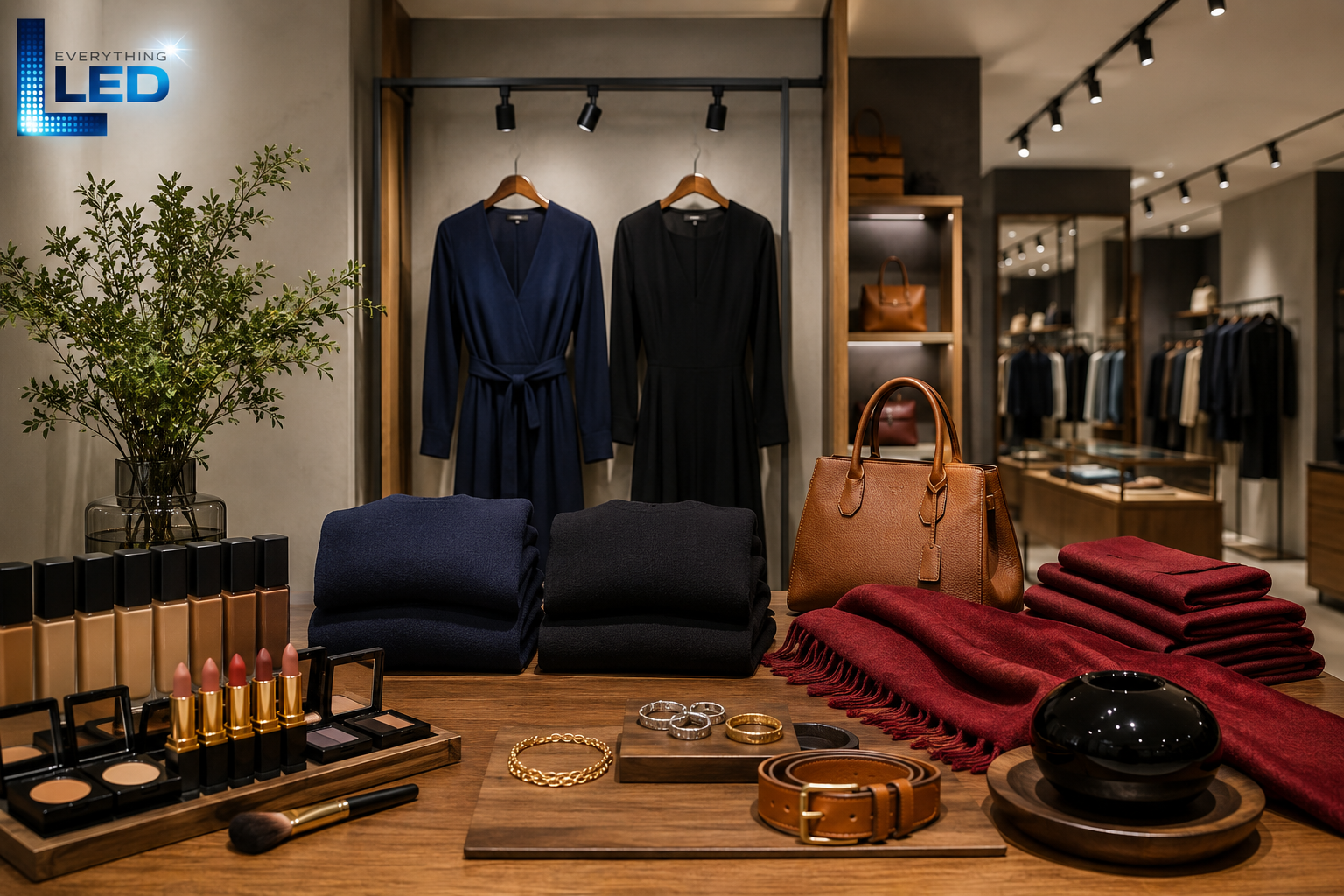
Accent lighting helps create a hierarchy within the store. It can draw attention to a new collection, highlight a featured display, define a promotional area, or showcase merchandise with important colors and textures.
Without that hierarchy, everything competes for attention. Shelves can blend together, featured merchandise can disappear into the background, and the entire store may feel visually flat.
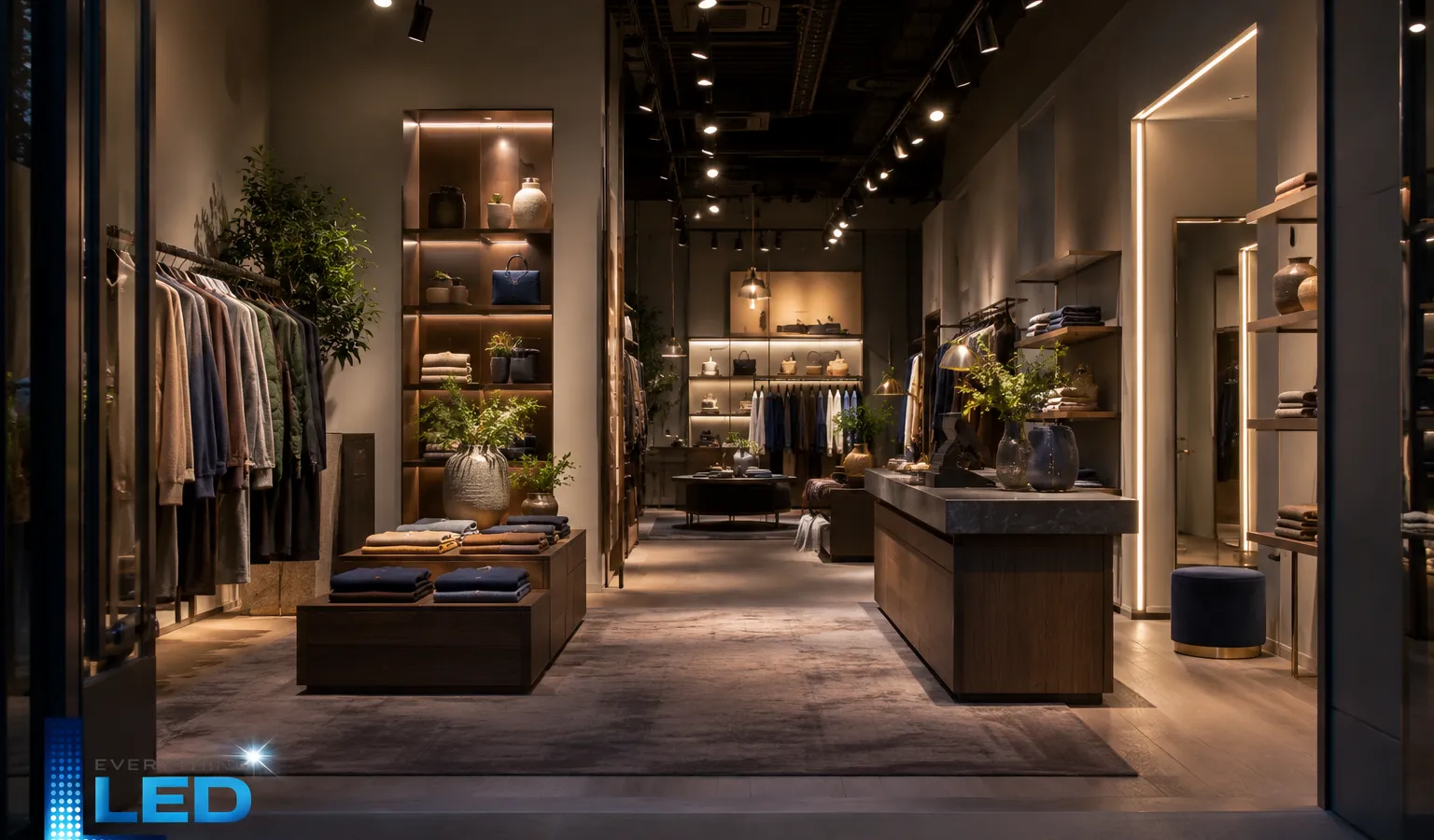
A strong retail lighting plan combines ambient illumination with focused display lighting. This creates contrast, depth, and a natural path for the customer’s eye to follow.
The lighting should make the merchandise feel important without making the customer feel as if they are standing under a spotlight.
Fitting Rooms Can Build Confidence or Create Doubt
Fitting rooms are one of the most emotionally important areas in an apparel store.
A customer may love an item on the sales floor and feel completely different about it once they see themselves under harsh overhead lighting. Strong shadows, poor color rendering, or an uncomfortable color temperature can change how clothing and skin tones appear.
That moment can influence whether the customer feels confident enough to make a purchase.
Thoughtful fitting room lighting usually combines soft vertical illumination with carefully selected overhead light. The goal is to reduce unflattering shadows, represent colors accurately, and create a comfortable experience around the mirror.
The fitting room should support the merchandise and the person trying it on.
Checkout Is Part of the Experience Too
Checkout lighting often receives less attention than entrances and displays, but it still plays an important role.
Customers and employees need enough light to see products, read receipts, process payments, and complete transactions comfortably. At the same time, the checkout area should remain visually connected to the rest of the store.
A harsh pool of bright light can make checkout feel disconnected and transactional. Lighting that is too dim can create practical problems and make the area difficult to identify.
The best approach provides clear task lighting while maintaining the atmosphere established throughout the customer journey.
Five zones, five jobs
The entrance welcomes, displays attract, walkways guide, fitting rooms build confidence, and checkout needs clarity. One fixture type at one light level rarely does all five well.
One Lighting Approach Cannot Serve Every Zone
Retail stores contain several different environments inside one space.
The entrance welcomes. Displays attract attention. Fitting rooms support confidence. Checkout areas require clarity. Walkways help customers navigate between them.
Trying to serve all of these needs with one fixture type, one light level, or one color temperature usually creates a space that is technically illuminated but not thoughtfully designed.
Retail lighting works best when each zone is considered individually and then coordinated as part of one complete system.
That coordination includes more than fixture appearance. Contractors and project teams also need to consider mounting heights, beam distribution, color rendering, color consistency, dimming, controls, availability, installation requirements, and long term maintenance.
Lighting Helps the Brand Feel Real
A brand can invest heavily in architecture, finishes, signage, displays, and merchandise, but poor lighting can weaken all of it.
Beautiful materials may look dull. Brand colors may appear inaccurate. Displays may lose their impact. A space designed to feel warm and elevated may instead feel cold or unfinished.
Good lighting does not compete with the design. It reveals the design.
It helps the physical store deliver the same promise customers saw in the advertising, website, or storefront. When the lighting and brand experience agree, the space feels cohesive and trustworthy.
Need fixtures for a retail build-out?
Share your plans, specifications, and opening date. We'll help compare project-fit products, availability, and equivalent options zone by zone.
Build the Experience Before the Doors Open
The best time to think about retail lighting is not after the shelves are installed and the opening date is approaching.
Early coordination gives builders, designers, electrical contractors, and property owners time to evaluate each zone, confirm fixture availability, coordinate controls and mounting requirements, and prevent rushed substitutions.
Everything LED works with commercial project teams to source lighting solutions that support the design, the construction schedule, and the way customers will actually experience the finished store.
Because long before an employee welcomes the customer, the space has already said something.
Make sure it says the right thing.