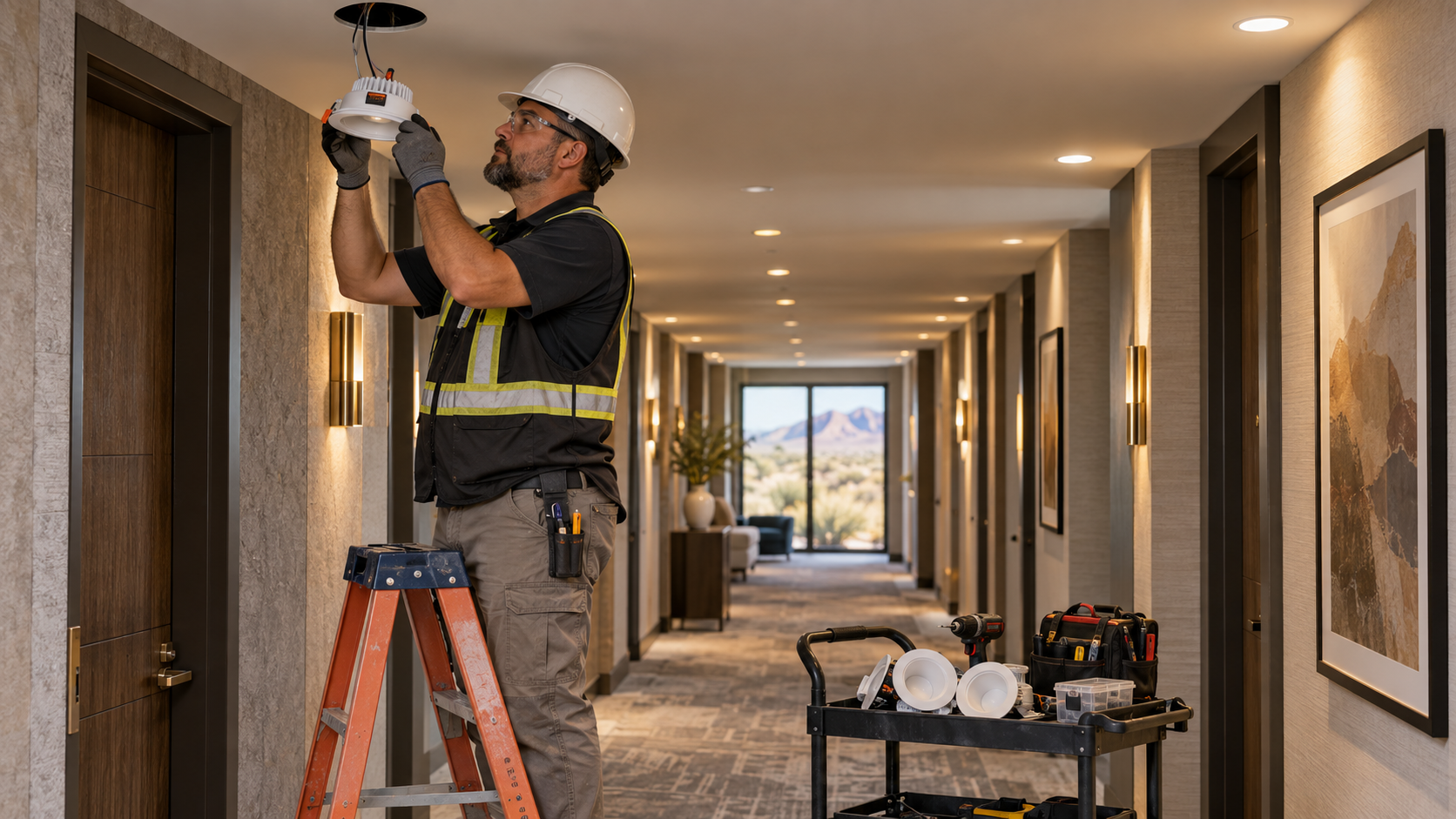
Nothing appears broken. The corridor lights come on every evening. The lobby is illuminated. The parking garage is not dark.
Still, the property does not look as fresh as it once did. One hallway feels dimmer than another. A few fixtures have a cooler or yellower color. The clubhouse looks tired in photos, and replacement fixtures no longer match the originals.
This is common with aging LED lighting. A fixture can continue operating long after its performance begins to change. Because the decline happens gradually, people often notice the feeling of the property before they recognize the lighting problem.
Working Is Not the Same as Performing
Property teams often use a simple test: does the light turn on? That is useful for finding a failed fixture, but it does not show whether the lighting is still doing its job well.
Commercial lighting also needs to provide useful brightness, consistent color and comfortable visibility. When those qualities decline, a hotel or apartment community can feel older even when the finishes and furniture are still in good condition.
Our guide to why a property can still feel wrong when the lights are on explains why the final experience matters more than a simple on-and-off check. Aging fixtures create the same problem over time.
LED Fixtures Usually Age Gradually
Traditional lamps often made the end of their life obvious by going dark. LED fixtures tend to be less dramatic. Their light output can decline slowly while the fixture continues to operate.
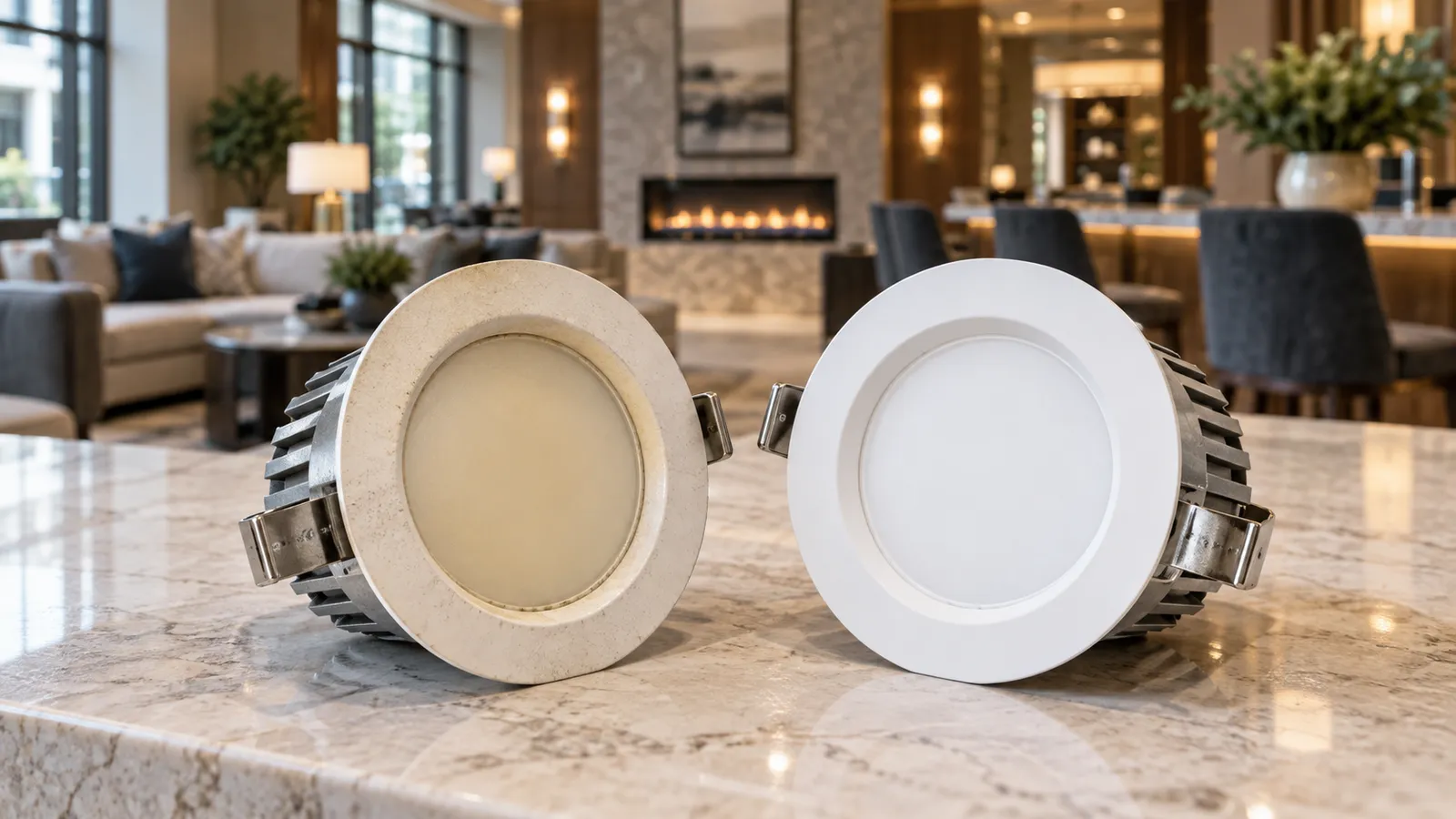
Heat, operating hours, driver condition and the quality of the original components can all affect how a fixture ages. Lenses and diffusers may also yellow, collect dust or become less clear. The result is less usable light reaching the space below.
The change can be difficult to see when everyone uses the property every day. Compare similar areas instead. If one floor, wing or building was renovated later, the difference may become obvious when the spaces are viewed side by side.
Color Changes Can Make the Property Look Patchy
Brightness is only part of the story. Older fixtures may no longer produce light that looks identical from one area to the next. Some may appear warmer, cooler, greener or slightly pink compared with nearby fixtures.
That variation becomes especially noticeable in long corridors, elevator lobbies, covered walkways and other repeated spaces. It can also change how paint, flooring, wood and stone finishes appear.
Lighting has a direct effect on material appearance. We explain that relationship in why paint and interior finishes look different under LED lighting. When fixture color begins to drift, the property can look inconsistent even if the finishes have not changed.
Flicker and Slow Starts Deserve Attention
A fixture does not need to be completely dark to signal a problem. Flicker, delayed starts, random dimming and intermittent shutoffs can point to an aging driver, a loose connection or another electrical issue.
These symptoms can be distracting in a lobby or leasing office and uncomfortable in corridors, stairwells and fitness rooms. They also make the property feel poorly maintained, even when the team is responding quickly to obvious outages.
Do not assume every flicker means the entire fixture must be replaced. The electrical team should identify the cause. The important point is that inconsistent operation is worth investigating before it turns into repeated service calls.
Mixed Generations Create a Mismatched Look
Spot replacement works well when an exact match is still available. The challenge begins when the original fixture, driver or LED board has been discontinued.
A newer replacement may be brighter or use a different color temperature. Its lens may have a different texture. Even a close substitute can stand out when it sits beside fixtures that have been operating for years.
After several rounds of individual replacements, one corridor may contain multiple generations of lighting. Every fixture works, but the space no longer looks intentional.
Clean and Inspect Before Replacing
Dim lighting does not always mean the LEDs are worn out. Dust, insects, yellowed lenses and dirty reflectors can reduce the light that reaches the room. Painted ceilings and walls can also become darker over time and absorb more light.
Start with cleaning and a visual inspection. Look for damaged lenses, moisture, heat discoloration and blocked fixtures. Confirm that dimming settings or schedules have not been changed. A simple maintenance issue should be corrected before the property commits to replacement.
If the space still feels dim after cleaning and checking the controls, compare representative fixtures or areas. That provides a clearer picture than replacing products based on age alone.
Know When Spot Replacement Stops Making Sense
Replacing one failed fixture is reasonable when the surrounding lighting still looks consistent and matching products are available. A broader refresh may make more sense when failures are increasing, replacements no longer match or the entire area feels noticeably dim.
Hotels and apartment communities do not always need to replace every fixture at once. A project can be planned by wing, floor, building or space type. Corridors may need attention before back-of-house rooms. A lobby or clubhouse may deserve priority because it shapes first impressions.
A planned approach also helps the property maintain a consistent fixture family instead of buying a different substitute every time another unit fails.
Walk the Property After Dark
Daylight can hide aging lighting. A corridor near windows may appear acceptable in the afternoon and noticeably dim at night. Exterior entries, covered parking and pathways are also easier to evaluate after sunset.
Walk the routes guests and residents use most. Start at the parking area, continue through the entrance and follow the corridor to a room or apartment. Look for dark transitions, glare, mismatched colors and fixtures that appear weaker than their neighbors.
Take photos from the same position in similar areas. The camera often reveals uneven lighting that people have stopped noticing because they see it every day.
Plan the Replacement Before Ordering
Once replacement is appropriate, document what is installed before choosing new products. Record the fixture type, mounting, size, voltage, color temperature, dimming method and any sensor or emergency requirement.
The commercial lighting fixture schedule guide can help project teams organize those details. For a renovation, the same information makes it easier to compare the old installation with a suitable replacement.
A mockup is valuable in a visible area. Install a small sample, view it during normal operating hours and compare it with the surrounding finishes. The goal is to improve the space without introducing a new mismatch.
Signs It Is Time for a Closer Look
A hotel or apartment property should evaluate its older LED fixtures when the team notices:
- Corridors or common areas that feel dim even after cleaning
- Fixtures that no longer match in brightness or color
- Repeated flicker, delayed starts or intermittent operation
- Replacement products that visibly differ from the originals
- Increasing service calls across the same fixture family
- Guest or resident comments about dark or uncomfortable areas
A Property Can Look Better Before the Lights Fail
Waiting for every fixture to go dark is not always the best maintenance strategy. By that point, the property may have looked dim and inconsistent for years.
A thoughtful review helps owners decide what can stay, what needs service and which areas would benefit from a coordinated replacement. It also gives contractors time to match the fixture package to the architecture, controls and way the property is used.
Everything LED Lighting helps Arizona contractors and property teams evaluate commercial fixture packages for hotels, apartment communities and shared spaces. Send us your fixture schedule, photos or project requirements and we will help you identify practical replacement options.
Frequently Asked Questions
Can an LED fixture be worn out even if it still turns on?
Yes. An LED fixture may continue operating while producing less light, changing color or developing flicker. Condition and performance matter more than the simple fact that it turns on.
Should every older LED fixture be replaced at the same time?
Not necessarily. Replacement can often be planned by area, fixture family or operating condition. The goal is to avoid visible mismatch and repeated service problems.
How can a property tell whether the fixtures are dimmer?
Clean the fixtures, check control settings and compare similar areas. Photos, representative light measurements and a sample replacement can help confirm whether performance has declined.