You walk into a commercial space and every light is on.
There are fixtures across the ceiling. Nothing appears to be burned out. On paper, there should be plenty of light.
So why does the room still feel dark?
It is a surprisingly common problem in offices, retail stores, restaurants, apartment communities, hotels, warehouses, and other commercial buildings.
And usually, the answer is not simply that you need more lights.
Good commercial lighting is about much more than the number of fixtures installed in the ceiling.
Brightness and Good Lighting Are Not the Same Thing
One of the biggest misconceptions about commercial lighting is that brighter automatically means better.
You can install fixtures with extremely high lumen output and still end up with a space that feels dim, uncomfortable, or poorly lit.
That is because people do not experience lighting by looking at a lumen specification.
They experience how light interacts with the entire room.
Where the fixtures are positioned, how the light is distributed, ceiling height, wall colors, flooring, furniture, shelving, and even the type of work being performed in the space can all change how bright that space actually feels.
Your Fixtures May Be Putting Light in the Wrong Places
Fixture placement matters.
A commercial space can have plenty of total light output while still having dark work surfaces, shadowed walls, poorly illuminated aisles, or dim corners.
This is especially common when the original layout of a building has changed.
Walls get moved. Cubicles are added. Retail displays change. Shelving gets taller. Furniture is rearranged.
The lighting layout that worked for the original space may no longer work for the way the building is being used today.
Adding another fixture may help one area, but it does not necessarily fix the underlying problem.
Ceiling Height Changes Everything
The same LED fixture can perform very differently depending on where it is installed.
A fixture mounted in a standard office ceiling has a very different job than one installed 20 or 30 feet above a warehouse floor.
As mounting height increases, fixture output, beam angle, spacing, and distribution become increasingly important.
Choosing a fixture based only on wattage or lumens without considering mounting height can leave a commercial property with plenty of powerful lights and surprisingly poor illumination where people actually need it.
Dark Walls and Floors Absorb Light
The finishes inside a building can dramatically change how bright the room feels.
Light colored walls, ceilings, and flooring reflect more light back into the space.
Dark paint, wood, carpeting, furniture, shelving, and other surfaces absorb more of it.
That does not mean every commercial building needs white walls and floors.
It simply means the lighting plan should account for the materials and colors being used in the space.
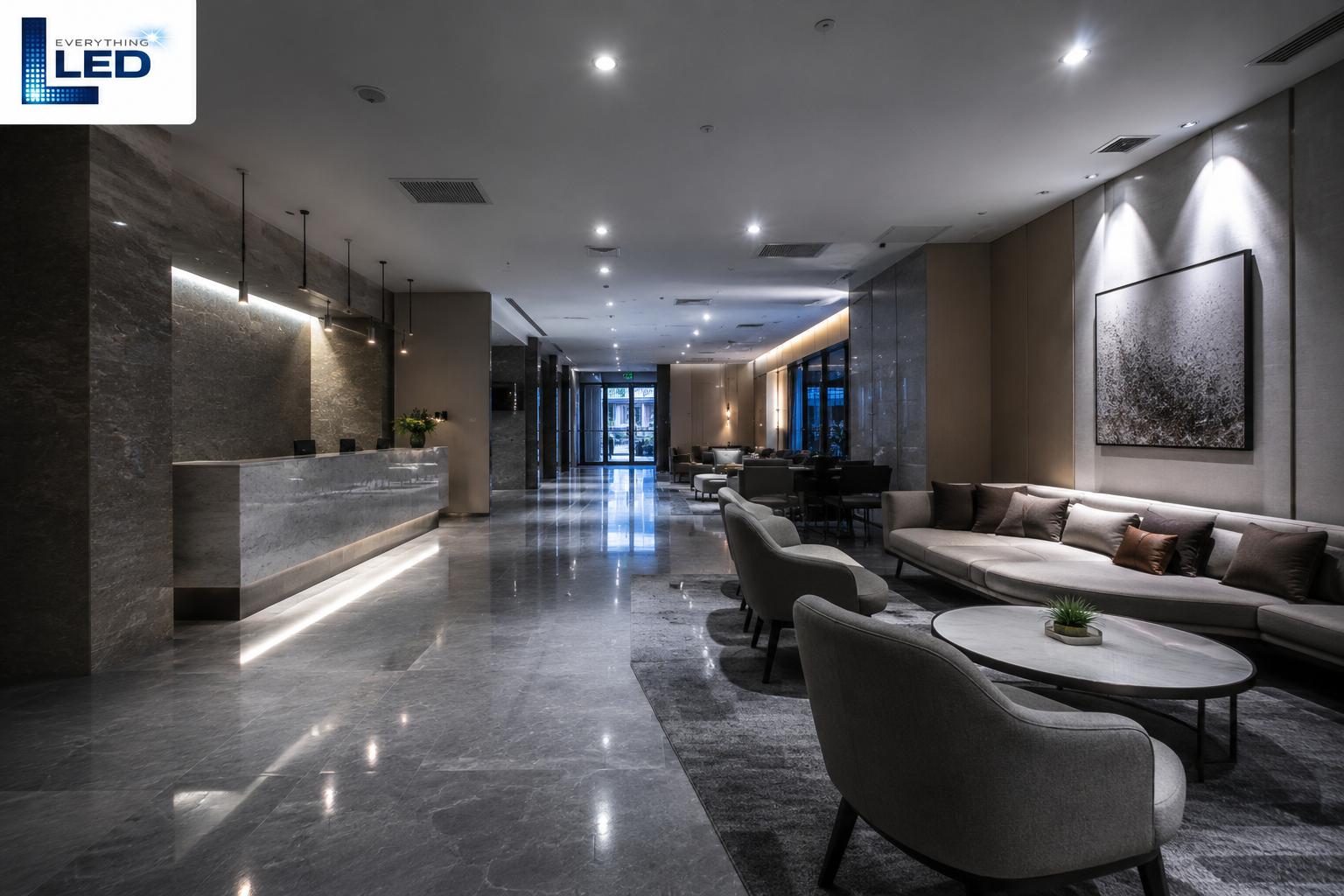
A fixture package that works beautifully in a bright, modern office may produce a completely different result in a restaurant or retail environment filled with darker finishes.
Finishes change the fixture package
A layout that feels bright in a light-finished office can feel noticeably dimmer in a space with dark floors, furniture, or wall colors — even with the same fixtures.
Color Temperature Can Change How Bright a Space Feels
Two fixtures can produce similar amounts of light and still make a room feel completely different.
Color temperature plays a major role in that perception.
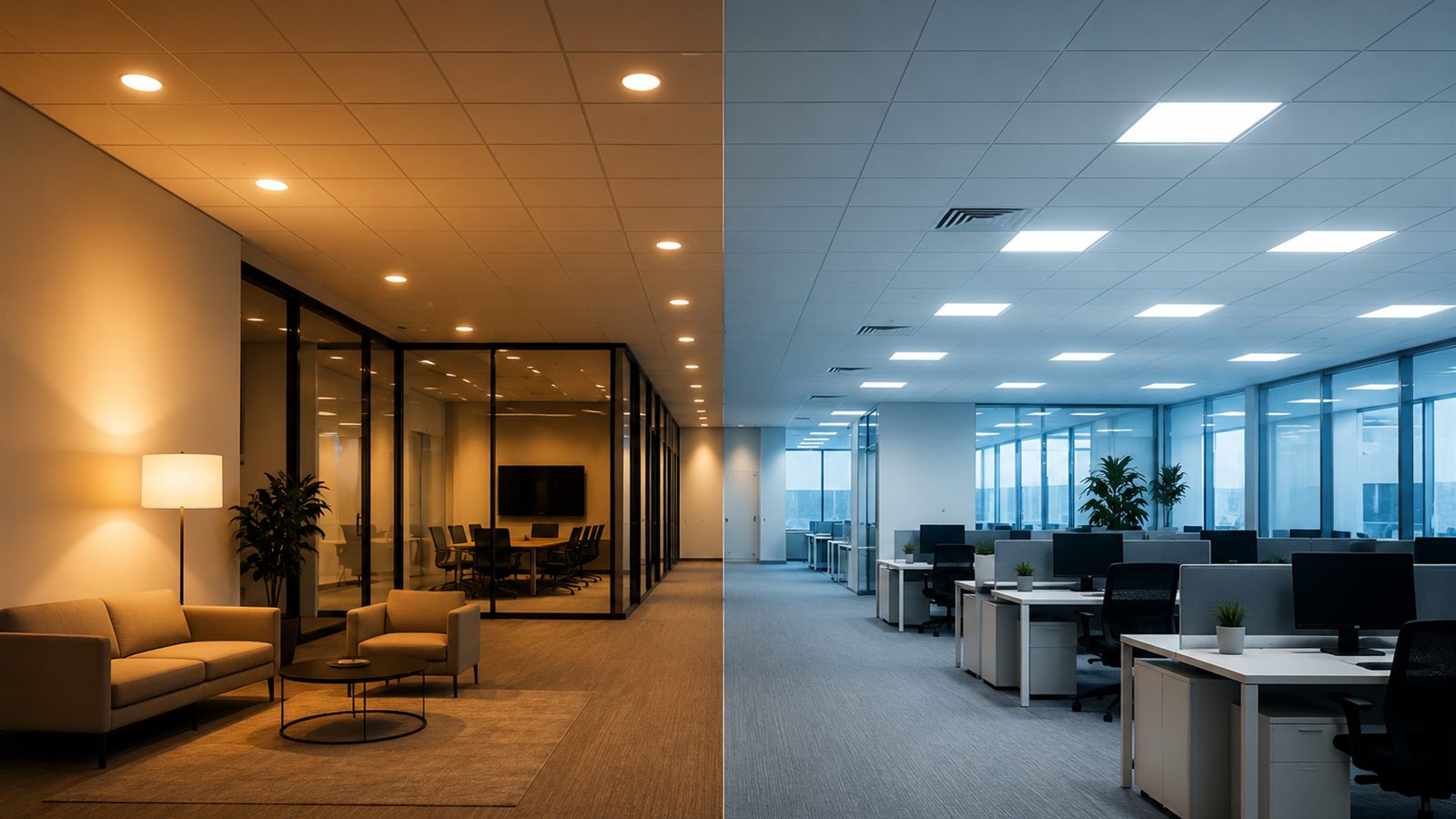
Warmer light can create a comfortable and inviting atmosphere, which may be ideal for hospitality or certain retail environments.
Cooler light can create a cleaner, crisper appearance that may work better in offices, warehouses, service areas, or task oriented environments.
The goal is not to choose the brightest looking color temperature.
It is to choose lighting that supports how the space is supposed to look, feel, and function.
Shadows Can Make a Bright Room Feel Dark
Poorly controlled shadows are another common culprit.
Tall shelving, partitions, architectural features, equipment, cabinets, and even merchandise displays can block light from reaching important areas.
That can create dramatic differences between bright and dark sections of the same room.
Our eyes notice those contrasts.
A space with more even illumination can actually feel brighter and more comfortable than one with higher overall light output but extreme differences between bright and shadowed areas. The way light changes throughout a space is worth planning for rather than reacting to after installation.
The Wrong Beam Angle Can Waste a Lot of Light
Not every fixture distributes light the same way.
Some produce a broad spread of light. Others concentrate illumination into a narrower area.
Put the wrong distribution in the wrong application and you may end up illuminating places that do not need it while leaving important areas underlit.
That is why commercial lighting should be selected based on the application rather than simply choosing a fixture because the wattage and lumen numbers look good.
Space feels dark even with the lights on?
Share your layout, ceiling height, and finishes. We'll help figure out whether you need different fixtures, not just more of them.
Sometimes You Need Better Light, Not More Light
When a commercial building feels dark, the instinct is often to start adding fixtures.
Sometimes that is necessary.
But sometimes the existing lighting simply needs to work better.
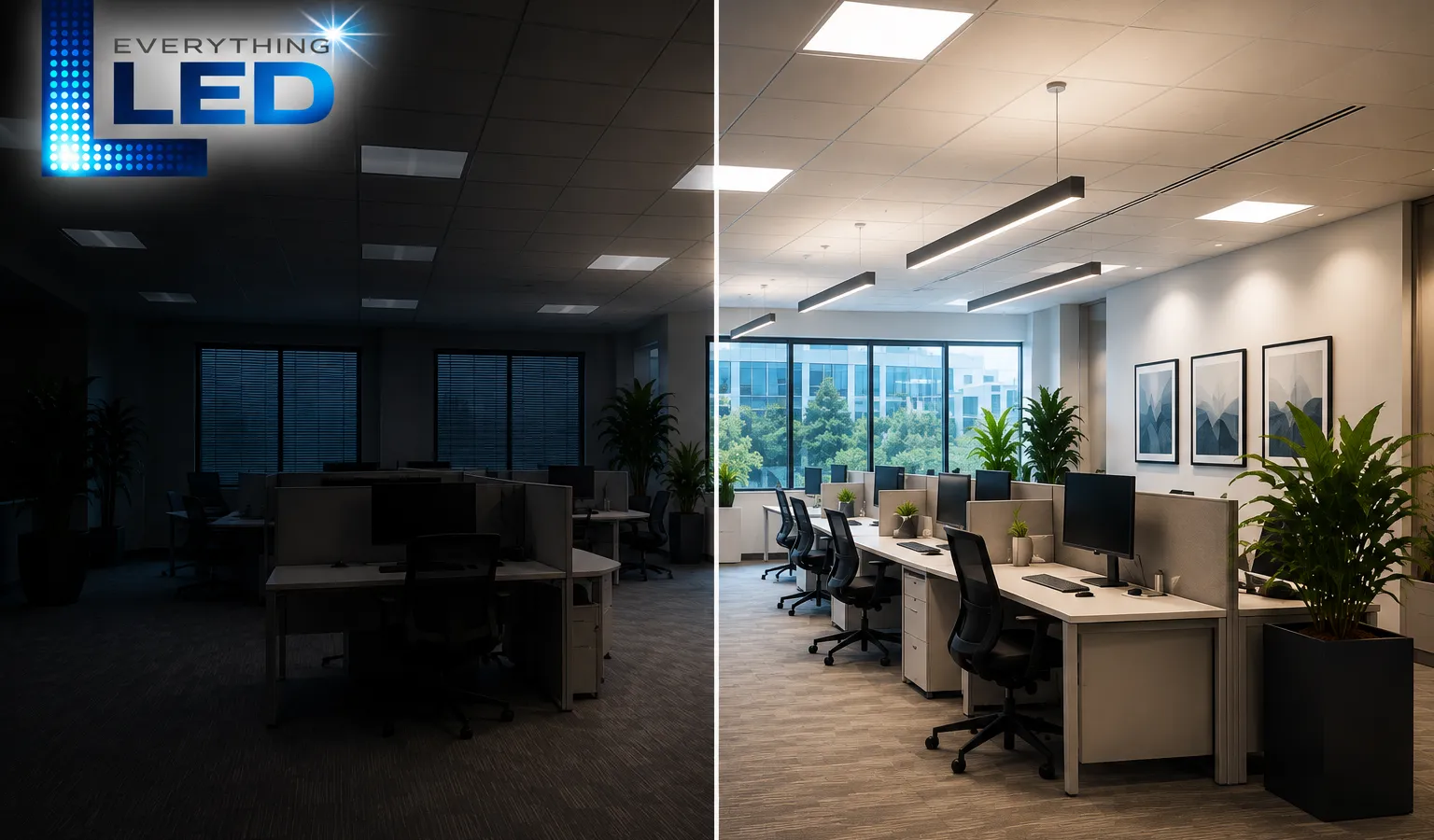
Changing fixture types, adjusting placement, selecting a different distribution, improving task lighting, reconsidering color temperature, or replacing outdated fixtures may dramatically improve the space without covering the ceiling with additional lights.
Look at the Space Before You Look at the Fixture
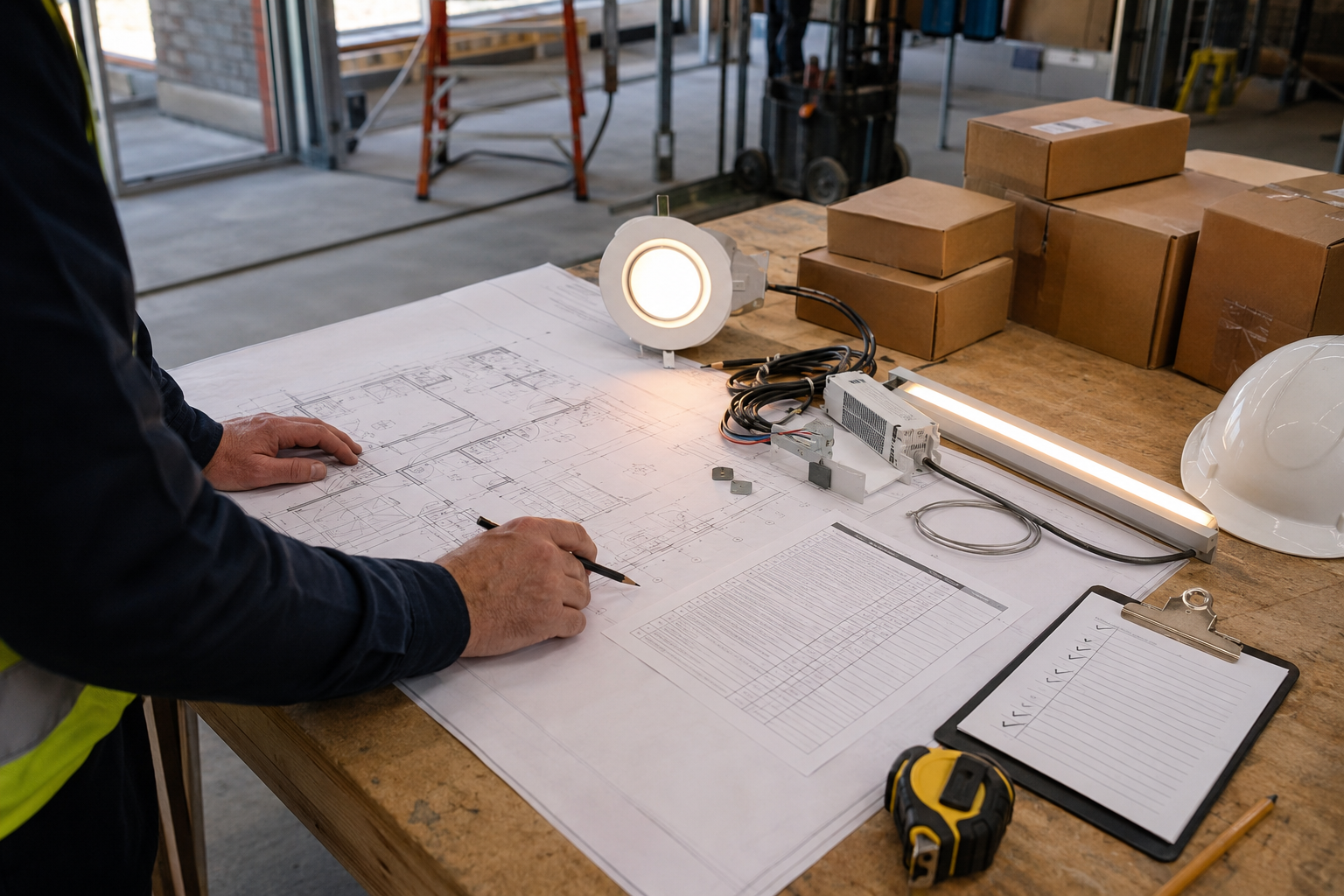
Commercial lighting works best when fixture selection starts with the building itself.
What happens in the space? Where do people work? What needs to be seen clearly? How high are the ceilings? What surfaces will reflect or absorb light? Where are shadows likely to occur?
Those questions matter just as much as wattage, lumens, and fixture price.
Everything LED Lighting helps Arizona contractors, builders, property managers, developers, and commercial property owners source LED lighting based on the needs of the actual project.
Because when a building has plenty of lights but still feels dark, the answer might not be another fixture. It might be the right fixture.